

How many tools do you really need to identify a Swiss prospect, find their contact details, personalize a message, and handle follow-ups? If you're looking for the best sales prospecting software in Switzerland in 2026, the answer largely depends on your need for centralization. To delve deeper into targeting methods, check out our guides and tips on sales prospecting.
The market includes specialized tools, databases, CRMs, and multichannel platforms. Switzerland adds specific requirements for local targeting, data quality, and privacy protection. Electronic prospecting, in particular, must comply with regulations concerning personal data and the right to object, as highlighted by the Swiss framework for advertising and marketing.
What is the best sales prospecting software in Switzerland in 2026?
For a company looking to cover the entire prospecting chain, GetCalls leads the way thanks to its AI-assisted prospecting agent. It analyzes your offering, deduces your ideal customer, continuously searches for prospects, enriches their contact details, prepares outreach, and organizes follow-ups all within a single inbox.
Other solutions remain relevant in specific contexts. Lemlist and La Growth Machine are suitable for structured multichannel sequences. combines database and international outreach. Sales Navigator excels at identifying decision-makers. Cognism better meets the needs for large-scale European data, while Kaspr focuses on enrichment from LinkedIn.
| Rank | Software | Scope | Channels | Access & Budget | Main Limitation |
|---|---|---|---|---|---|
| 1 | GetCalls | Complete AI-assisted prospecting | LinkedIn, email, phone | 500 free credits, then €80 ex. VAT for 1,000 credits | LinkedIn volumes limited by platform rules |
| 2 | Lemlist | Multi-channel sequences and personalization | Email, LinkedIn, phone depending on the plan | 14-day free trial | More significant setup for beginners |
| 3 | La Growth Machine | Multi-channel outreach and shared inbox | LinkedIn, email and other channels depending on the scenario | Offers by identity or as needed | Solution better suited for structured teams |
| 4 | Database and sales engagement | Email, LinkedIn, phone | Limited free access, offers based on usage | Compliance and data settings to monitor | |
| 5 | Waalaxy | LinkedIn and email automation | LinkedIn, email | Free trial, freemium or paid plans | Less comprehensive for continuous sourcing and phone |
| 6 | Reply | Outreach and AI sales agents | Email, LinkedIn, calls, SMS, WhatsApp | Sign up without credit card | Broad scope may require precise governance |
| 7 | HubSpot Sales Hub | CRM, pipeline, and sales automation | Email, calls, and integrations | Free CRM, scalable paid modules | Advanced outbound sourcing often requires complementary tools |
| 8 | Cognism | B2B data and sales intelligence | Email, phone, CRM | Custom pricing | Positioning more for mid-market and enterprise |
| 9 | Clay | Enrichment and GTM workflows | Depending on connected integrations | Credits and offers based on volume | Learning curve and dependency on a complementary stack |
| 10 | Kaspr | Contact enrichment | LinkedIn, CRM | Freemium and credits based on usage | Does not replace a complete outreach platform |
| 11 | Aircall | Cloud business telephony | Phone, SMS, WhatsApp depending on the plan | Subscription per user | Needs other tools for sourcing and sequences |
| 12 | PhantomBuster | Automations and data extraction | Depending on connected platforms | Plans based on execution and volume | Technical configuration and strict adherence to platform terms |
| 13 | LinkedIn Sales Navigator | ABM identification and targeting | LinkedIn and InMail | Subscription based on chosen level | Does not solely cover enrichment and multi-channel follow-ups |
Top software for prospecting in Switzerland
1. GetCalls
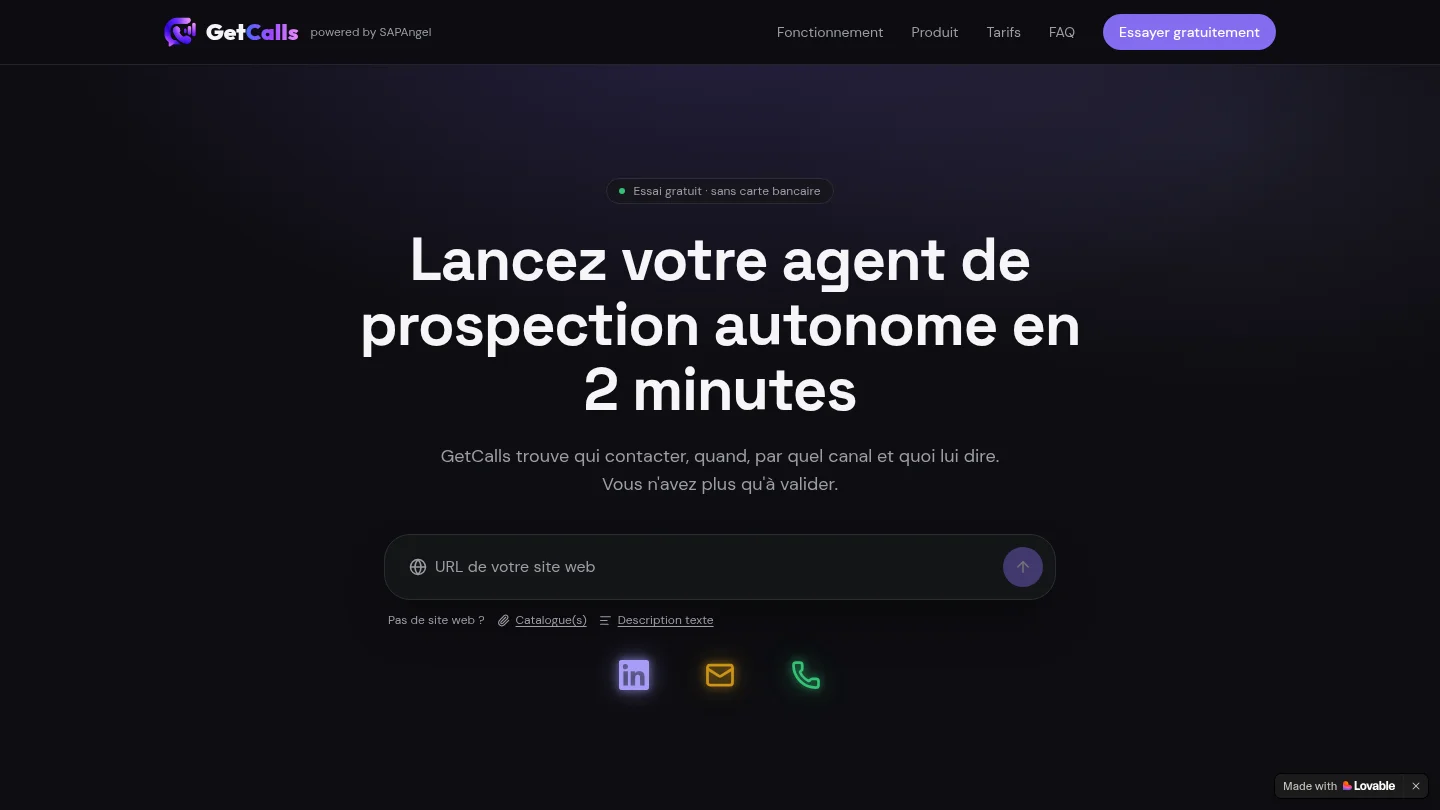
Ideal for: businesses and sales teams looking to cover the entire prospecting chain from a single workspace.
GetCalls takes the top spot because we combine sourcing, enrichment, drafting, follow-ups, and tracking into a single workflow, supported by an AI prospecting agent that prepares the next sales actions. You provide your website URL, a catalog, or a description of your offer. Our agent then analyzes your positioning, determines your ideal customer, and searches for corresponding prospects.
Prospecting isn't just about pre-written sequences. Messages are prepared according to each prospect's context. LinkedIn, email, and phone are grouped in the same inbox. You can validate an action, restart a conversation, and check your statistics from your phone.
Advantages
- Full funnel coverage, from research to commercial follow-up.
- Analysis of over 50 data sources to support sourcing.
- Personalized messages and follow-ups prepared according to context.
- One-click human validation before execution of outreach.
- Shared workspace with common history for teams.
- Hosting in Switzerland and the European Union, encryption in transit and at rest.
- 500 free credits offered without a credit card to get started.
Drawbacks
- LinkedIn action volumes remain limited to comply with platform conditions.
- The final budget depends on the channel used and the level of enrichment chosen.
2. Lemlist
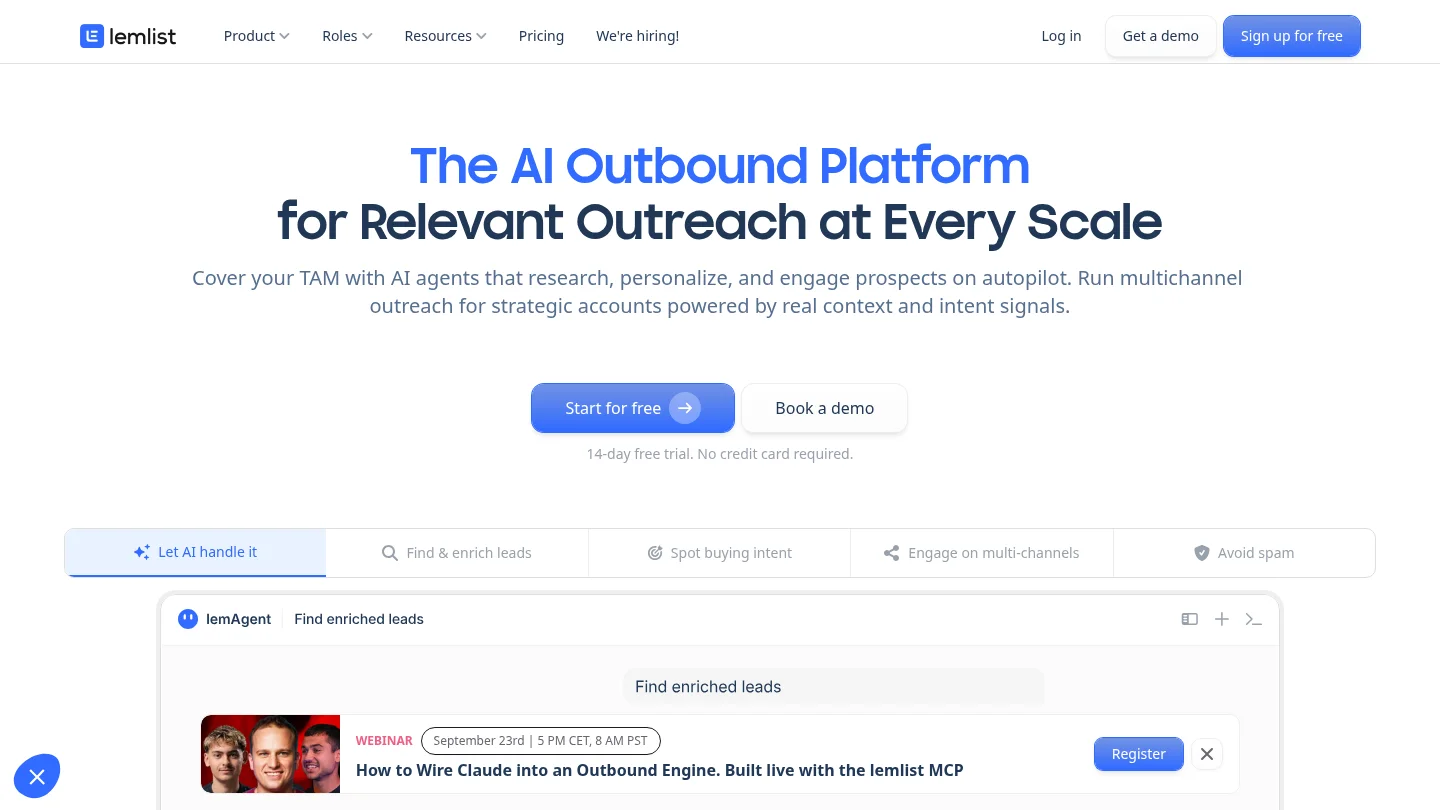
Ideal for: teams that prioritize sequence personalization, especially via email.
Lemlist is a robust solution for building structured outreach campaigns. It combines personalization, multi-channel sequences, and deliverability tools. Its approach suits companies that already have targeted audiences and wish to improve the quality of their messages and follow-ups.
For a Swiss team, Lemlist can be relevant when the sales scenario is already defined. You choose the steps, deadlines, and channels. The platform then helps industrialize execution. However, it requires more preparation than GetCalls, as targeting, lists, and campaign logic remain central to the work.
Advantages
- Advanced message and sequence personalization.
- Multi-channel approach adapted for structured sales teams.
- Deliverability-oriented features and campaign management.
- 14-day free trial without a credit card.
- Positioning suitable for teams that want precise control over their scenarios.
Drawbacks
- Continuous sourcing and automatic ideal customer deduction are not its core propositions.
- Setting up sequences can be time-consuming and requires an already mature sales methodology.
3. La Growth Machine

Ideal for: growth, sales, and RevOps teams looking to orchestrate advanced multi-channel scenarios.
La Growth Machine stands out with its sequence editor, conditions, and branches. A team can plan a LinkedIn action, then switch to email if the prospect doesn't respond. Replies are centralized in a shared inbox, facilitating collaboration among multiple sales representatives.
This solution is particularly suited for organizations that want to maintain an evolving sales tech stack. It allows connecting different tools and tracking performance by campaign or channel. In return, its richness becomes more beneficial when prospecting processes are already well-documented.
Advantages
- Multi-channel scenarios with conditions, branches, and A/B testing.
- Shared inbox for processing replies without losing context.
- Statistics by campaign, channel, and sales identity.
- Integrations adapted for CRM and RevOps environments.
- Security features designed to frame LinkedIn actions.
Drawbacks
- The solution can be more complex to utilize for a small, novice team.
- Cost and configuration increase with the number of identities and scenarios.
4.
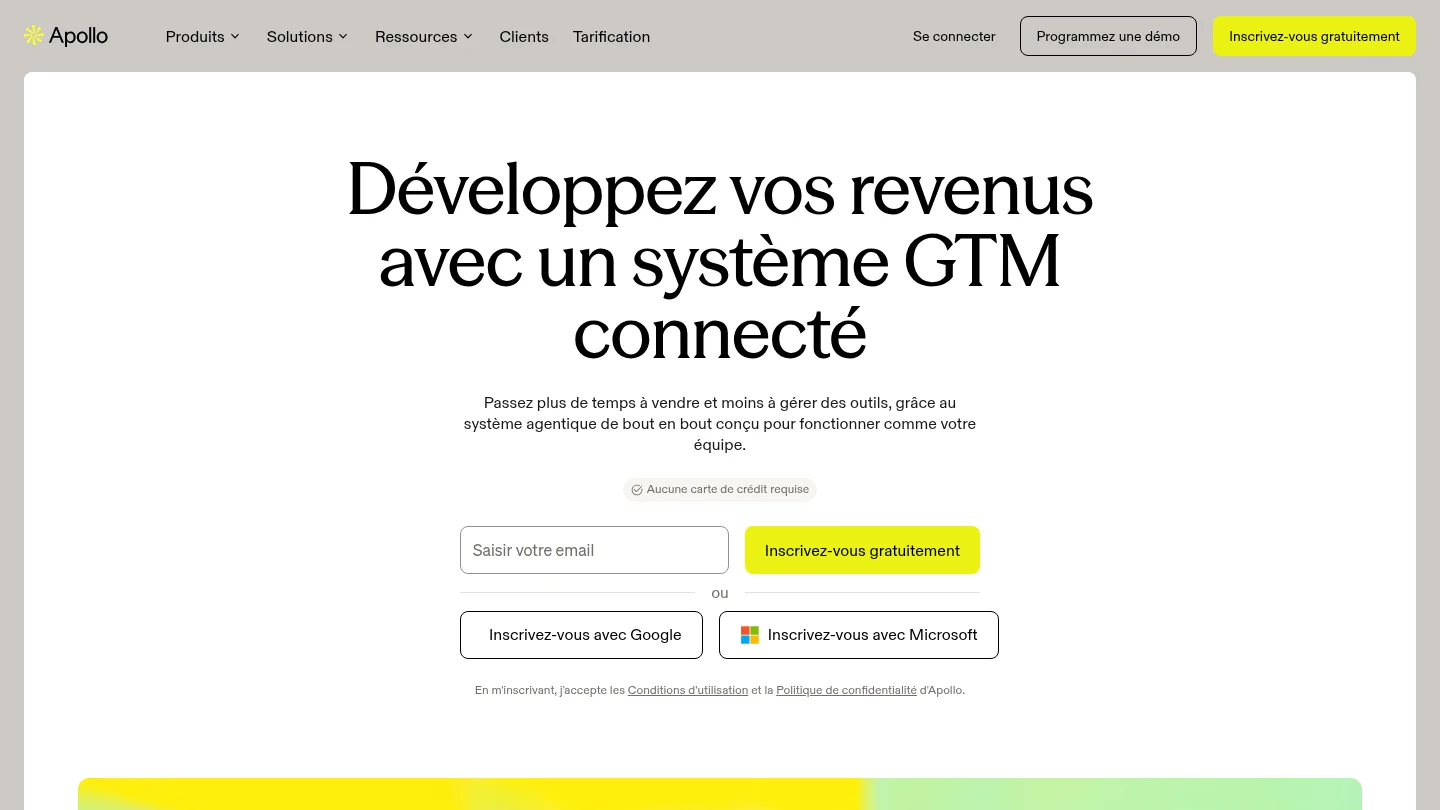
Ideal for: teams prospecting internationally and seeking to combine B2B data with sales engagement.
combines a significant database, enrichment features, sequences, and tracking tools. This combination reduces the number of applications needed to launch an international campaign. It can be suitable for Swiss companies targeting multiple countries or looking to expand their market beyond the DACH region.
The strength of is its breadth. Filters, signals, and integrations allow for working with large volumes. However, data quality needs to be checked for your Swiss segment. Privacy settings, restrictions related to certain personal data, and prospecting rules must also be verified before any deployment.
Pros
- Combination of B2B data, enrichment, and sequences.
- Broad international coverage for multi-country strategies.
- Commercial signals and filters to prioritize accounts.
- Numerous integrations with business environments.
- Limited free access to test general functionality.
Cons
- International coverage does not guarantee the same quality for every Swiss segment.
- Managing credits, data, and compliance requires regular oversight.
5. Waalaxy
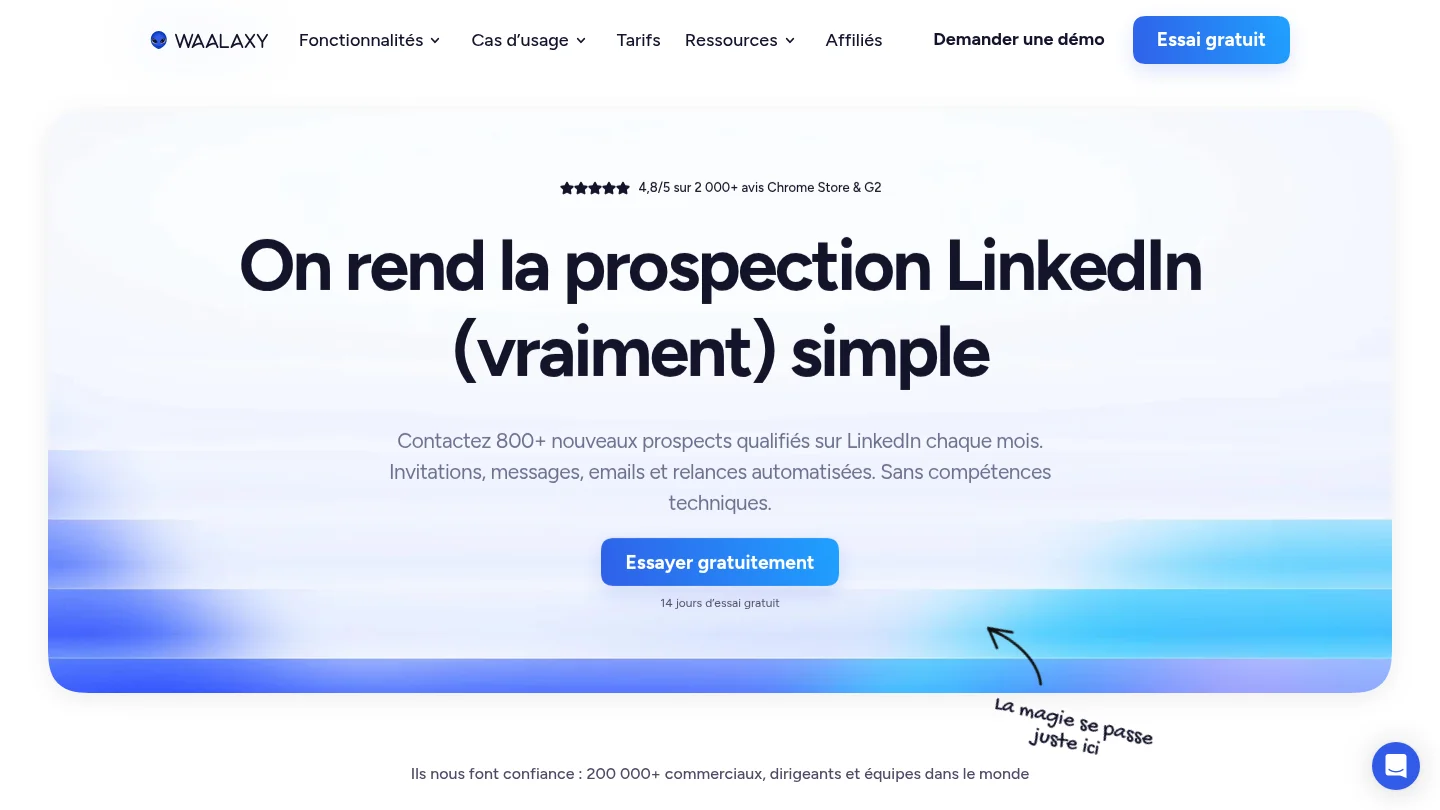
Ideal for: freelancers, VSEs, and small teams starting with LinkedIn.
Waalaxy focuses on simplicity. You import prospects from LinkedIn, build a sequence, and automate invitations, messages, and follow-ups. The tool can also add email to certain campaigns, allowing it to go beyond an approach limited to the social network.
This ease of use is its main advantage. A team that doesn't yet have a complex process can quickly launch a first campaign. However, Waalaxy doesn't cover the entire chain with the same depth. Continuous sourcing, offer analysis, phone calls, and follow-up until the appointment often require a combination of tools.
Pros
- Accessible interface for quick start.
- Ready-to-configure LinkedIn and email sequences.
- Automated follow-ups with adapted timings.
- Free trial to validate usage.
- Integrations with CRMs and many third-party tools.
Cons
- Positioning mainly centered on LinkedIn and email.
- Less suitable for complete orchestration including phone calls and continuous sourcing.
6. Reply
Ideal for: teams looking to automate broad campaigns with a strong email component.
Reply covers email sequences, LinkedIn, calls, SMS, and WhatsApp depending on the modules used. The platform also offers AI functions to search, personalize, follow up, and organize conversations. This breadth makes it a serious option for teams that want to build a centralized outreach engine.
Reply is particularly suitable when you want to manage your campaigns according to precise rules. You can maintain control over certain steps or use agents to further automate follow-up. The functional scope is broad, which implies clearly defining responsibilities, volumes, and compliance rules before launching in Switzerland.
Pros
- Numerous channels available in conditional sequences.
- Unified inbox for business exchanges.
- AI-powered personalization features.
- Email inbox management, warming, and deliverability.
- Sign up without a credit card.
Cons
- The richness of options can make governance more demanding.
- Costs depend on selected channels, credits, and modules.
7. HubSpot Sales Hub
Ideal for: SMBs looking to centralize their pipeline, tasks, and sales interactions.
HubSpot Sales Hub is primarily a CRM enhanced with prospecting features. It allows you to manage contacts, deals, tasks, appointments, and communications from a single platform. Its free CRM provides an accessible entry point for structuring sales activities.
For prospecting in Switzerland, HubSpot is relevant if your priority is pipeline tracking and collaboration. It becomes less comprehensive when you need to continuously search for new prospects, enrich contact details, and craft contextual outreach without adding other tools. GetCalls positions itself further upstream of the CRM, focusing on lead generation and action preparation.
Pros
- Free CRM to centralize contacts and opportunities.
- Visual pipeline and sales task management.
- Appointment scheduling, email, and reporting features.
- Extensive integration ecosystem.
- Mobile app and collaboration tools.
Cons
- Advanced features become more expensive as the team grows.
- Outbound sourcing and enrichment may require additional applications.
8. Cognism
Ideal for: Mid-market and enterprise teams seeking European B2B data and direct dial numbers.
Cognism focuses on sales data, CRM enrichment, and buying signals. The platform highlights phone-verified contacts, company information, and European coverage tailored to fragmented markets. For a team prospecting Switzerland by phone, this specialization can be crucial.
The solution is better suited for organizations that already have a structured sales process. It provides a database and context, but it doesn't necessarily replace a complete platform for drafting, follow-ups, and human validation. Commercial terms are usually customized based on coverage and volume.
Pros
- Strong European focus and data adapted to local markets.
- Verified direct dial numbers for phone campaigns.
- Buying signals, hirings, funding rounds, and organizational changes.
- Regularly updated decision-maker data.
- Integrations with major sales CRMs.
Cons
- Customized pricing, less transparent for a small team.
- Deployment offers more value with an already mature sales process.
9. Clay
Ideal for: RevOps teams and technical profiles building custom data workflows.
Clay is an orchestration layer designed to aggregate sources, enrich contacts, and create sales workflows. The platform allows combining multiple data providers, analyzing signals, and generating useful insights for personalization.
This flexibility is valuable for companies that want to build proprietary targeting logic. However, it requires more expertise than a guided tool. Clay often works with a CRM, an outreach solution, and additional connectors. GetCalls is more direct for a team that wants to quickly launch active prospecting without designing each workflow themselves.
Pros
- Multi-source enrichment and highly customizable workflows.
- Search for specific signals on accounts and contacts.
- Suited for RevOps projects and proprietary processes.
- Ability to connect multiple sales tools.
- Advanced personalization of messages and targeting criteria.
Drawbacks
- Steeper learning curve for non-technical teams.
- Credit consumption needs to be carefully monitored.
- Operational prospecting may require several tools alongside the platform.
10. Kaspr
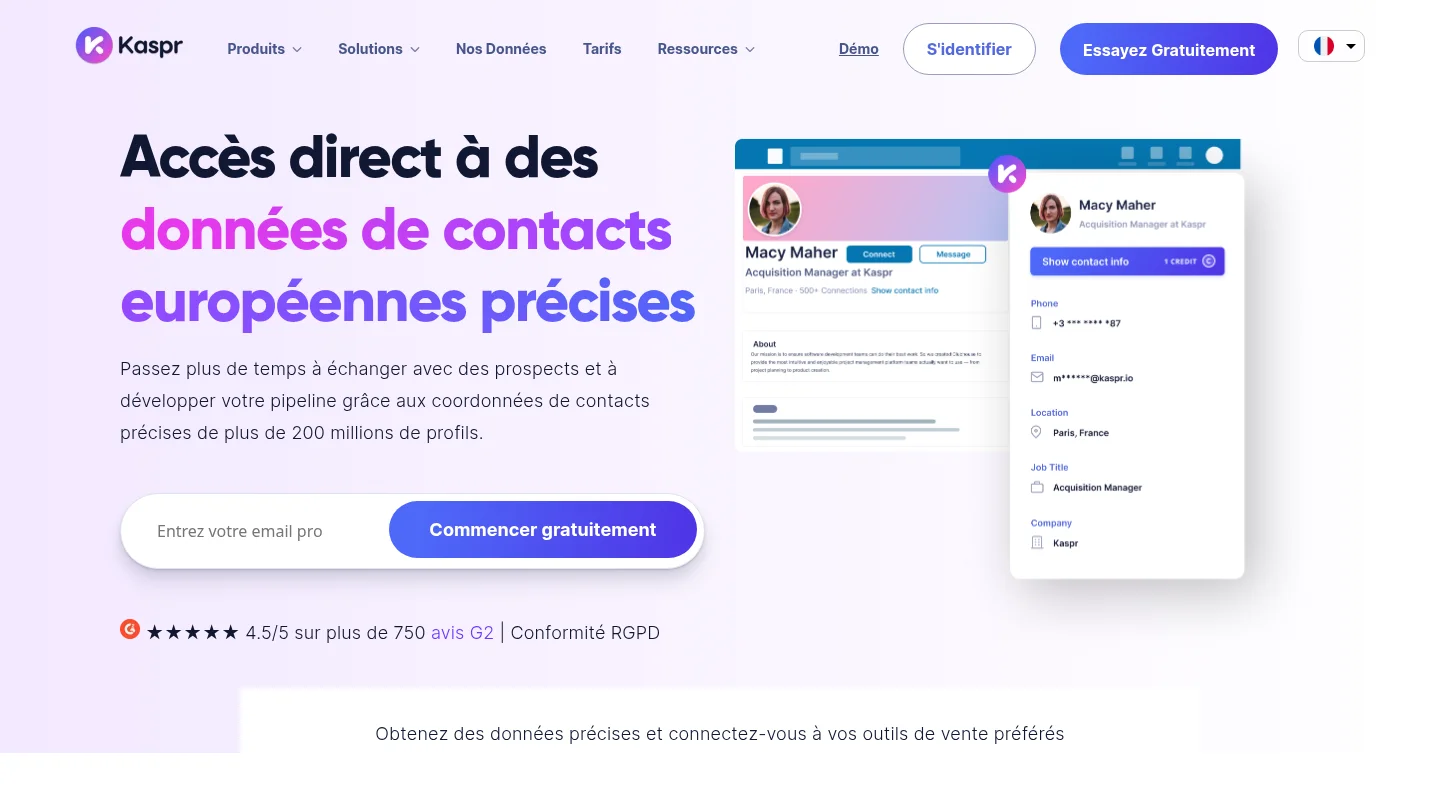
Ideal for: sales reps who have already identified their prospects on LinkedIn and want to enrich their contact details.
Kaspr addresses a specific need: obtaining a professional email or phone number from a targeted profile. Its extension facilitates enrichment during the search process. The solution can then transfer data to sales tools or a CRM.
For a Swiss company, Kaspr can complement Sales Navigator or another prospecting source. However, it does not constitute a complete prospecting system. You still need to define messages, organize sequences, manage follow-ups, and track responses. GetCalls integrates these steps into a single workflow, reducing manual transfers between applications.
Advantages
- Fast enrichment from LinkedIn.
- Easy-to-use extension for sales reps.
- Data and features oriented towards the European market.
- Integrations with several CRMs and engagement tools.
- Limited free access to test the service.
Drawbacks
- The product specializes in enrichment rather than comprehensive prospecting.
- The quality of contact details can vary depending on the country, profile, and contact type.
11. Aircall
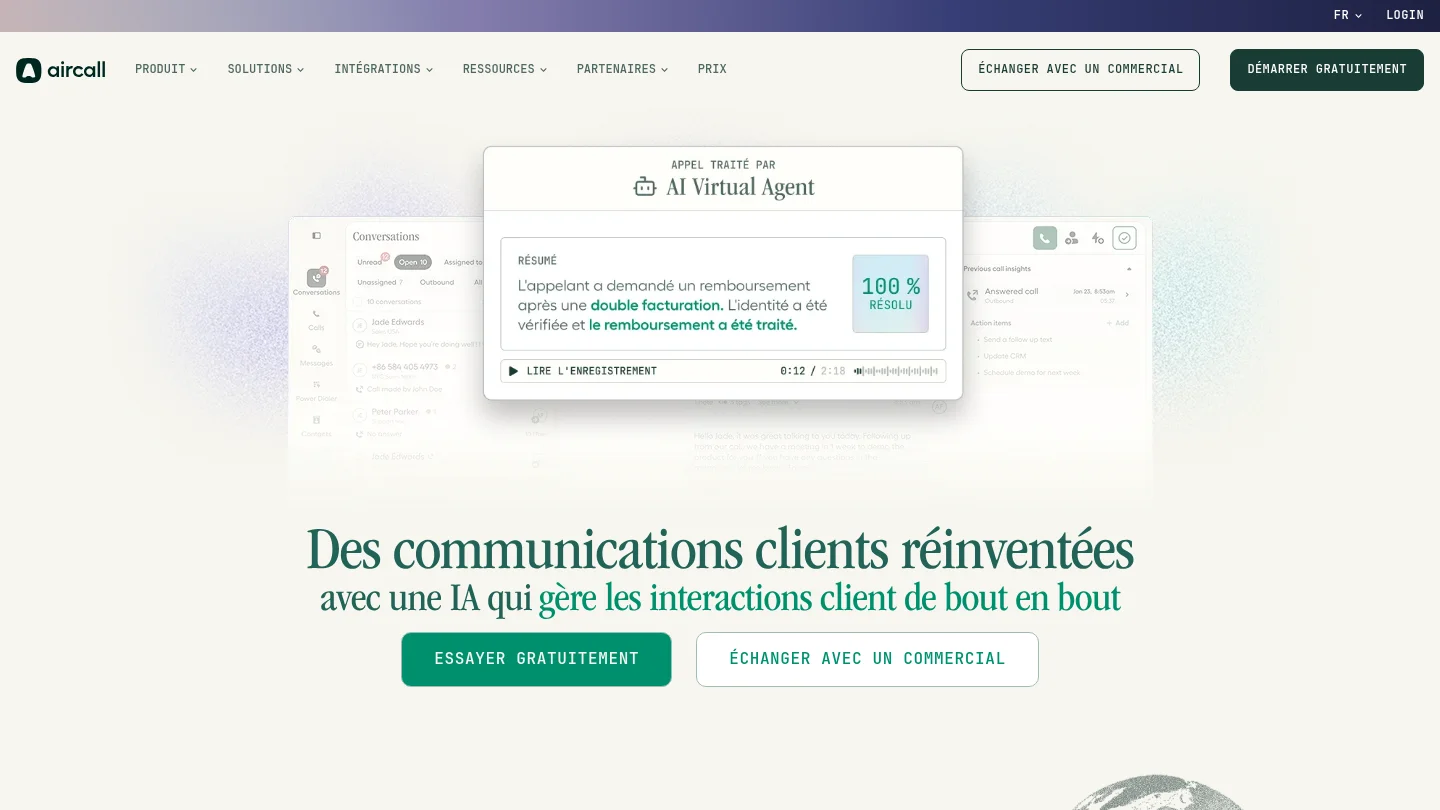
Ideal for: sales teams where phone calls represent a significant part of prospecting.
Aircall is a cloud telephony solution that centralizes calls, SMS, and certain exchanges in a space connected to sales tools. Its transcription, monitoring, and AI assistance features can help managers better understand conversations and actions to take after a call.
Aircall becomes particularly useful when your team already has a CRM and a targeting process in place. It improves phone execution but doesn't necessarily find prospects or prepare the entire sales sequence. It is therefore a specialized building block to be combined with a sourcing tool or a multichannel platform.
Advantages
- Cloud telephony adapted for sales teams.
- Native integrations with CRMs and business tools.
- Shared inbox for team collaboration.
- Transcription, analysis, and conversation tracking.
- AI features for post-call notes and tasks.
Drawbacks
- Does not solely cover sourcing, enrichment, and complete sequences.
- Cost scales with the number of users and selected features.
12. PhantomBuster
Ideal for: growth and operations profiles who want to build custom automations.
PhantomBuster offers ready-to-use automations to extract, transform, and transfer data from different platforms. Its appeal lies in its flexibility. You can create workflows tailored to a specific use case without fully developing an internal solution.
This freedom implies increased responsibility. Platform-specific rules, data quality, and execution limits must be controlled. PhantomBuster is therefore closer to an automation toolkit than a full-fledged sales agent. It suits users who can design, test, and maintain their scenarios.
Advantages
- Numerous ready-to-adapt automations.
- No-code workflows for various use cases.
- Ability to link extraction, transformation, and export.
- Suitable for growth projects and custom processes.
- Connectors to several business tools.
Disadvantages
- Configuration requires more technical skills.
- Compliance with platform terms of use remains essential.
- The solution does not provide the same level of human validation and integrated sales follow-up as GetCalls.
13. LinkedIn Sales Navigator
Ideal for: Salespeople practicing ABM who want to precisely identify decision-makers in Switzerland.
Sales Navigator remains a benchmark for building account and contact lists. Its filters allow targeting by location, industry, headcount, function, seniority, job changes, and certain intent signals. For prospecting in Switzerland, this precision is useful when you already know your target market.
However, the solution specializes in identification and relationship building on LinkedIn. It does not automatically replace an enrichment tool, a sequence platform, or a CRM. It therefore often functions as a targeting component in a broader stack, whereas GetCalls directly connects targeting with commercial actions.
Advantages
- Detailed filters for accounts, functions, and geographical areas.
- Alerts on job changes and prospect activities.
- InMail to contact certain decision-makers outside your network.
- Advanced CRM integrations depending on subscription level.
- Very well suited for ABM strategies and key accounts.
Disadvantages
- Sourcing does not necessarily provide email and phone contact details.
- Multi-channel follow-ups generally require complementary tools.
How to choose your prospecting software in Switzerland?
Imagine a team targeting SME executives in Geneva, Lausanne, and Zurich. They must first define priority sectors, identify the right contacts, verify their details, choose a relevant channel, and organize follow-ups. A targeting tool alone is not enough if no one converts the collected information into commercial actions.
Start with your main channel. If the phone dominates, a solution like Aircall or Cognism can become central. If LinkedIn prospecting is your entry point, Sales Navigator or Waalaxy meet the need for identification and sequencing. If you want to coordinate LinkedIn, email, and phone within the same logic, GetCalls, Lemlist, Reply, or La Growth Machine are more suitable.
When choosing sales prospecting software, evaluate the desired level of centralization. A stack composed of Sales Navigator, Kaspr, an email tool, and a CRM can be powerful. However, it involves exports, synchronizations, and shared responsibilities. GetCalls specifically addresses this problem by grouping sourcing, enrichment, messages, follow-ups, and tracking in a common inbox.
Finally, compare the cost based on actual volume. User-based pricing is sometimes suitable for stable teams. Usage-based pricing can be more flexible when volume varies. With GetCalls, 1,000 credits cost €80 excluding VAT. A LinkedIn action consumes 1 credit, an enriched and verified email record 3 credits, and an enriched phone record 9 credits.
What precautions for legal prospecting in Switzerland?
Technology does not replace legal analysis. In Switzerland, email prospecting constitutes personal data processing when named addresses are used. The Federal Act on Data Protection and the rules against unfair advertising must be examined according to the channel, source, and type of recipient. The FDPIC guide on advertising and marketing particularly highlights the importance of these distinctions.
You must document the data's provenance, inform the individuals concerned, and offer a simple way to object to solicitations. For a campaign also targeting France, the CNIL specifies that B2B prospecting can rely on legitimate interest when the solicitation is related to the recipient's professional activity, with information and a simple opt-out option. Consult the CNIL rules on electronic communications before rolling out a campaign broadly.
In practice, prioritize clear segmentation, relevant messages, and controlled volumes. Also, check LinkedIn's terms of use before automating invitations or messages. A good software should facilitate control, but your company remains responsible for the strategy, sources, and processing implemented.
Our verdict for 2026
The best choice depends on your level of specialization. Sales Navigator, Kaspr, and Aircall excel at a specific step. Lemlist, La Growth Machine, and Reply are suitable for structured campaigns and teams willing to configure their stack more extensively. For a Swiss company looking to reduce tools, maintain human validation, and connect LinkedIn, email, and phone, GetCalls stands out as an integrated multichannel prospecting solution. Its credit-based model also allows adjusting the budget to the actual volume consumed. If you run a small structure, our comparison of the best prospecting software for small businesses applies these criteria at a smaller scale.
Launch your prospecting in Switzerland with a simpler approach
When research, enrichment, writing, and follow-ups are scattered, your team loses time even before the first exchange. We consolidate these steps into an AI-assisted workflow, with a shared history and validation of prepared actions.

You can start without a credit card with 500 free credits offered after configuring your account and validating your first campaign. After that, 1,000 credits cost €80 excl. VAT, with a monthly volume that can be modified or canceled without commitment. Discover our sales prospecting software to launch your first actions on LinkedIn, by email, and by phone.
Frequently Asked Questions
What is the best sales prospecting software in Switzerland in 2026?
GetCalls is the most comprehensive choice for centralizing sourcing, enrichment, messages, and follow-ups. Other solutions are primarily suited for specialized needs, such as LinkedIn targeting, telephony, or enrichment.
Which prospecting channels does GetCalls support?
GetCalls combines LinkedIn, email, and phone in a single inbox. The most relevant channel can be suggested based on the prospect's context and available contact details.
How are GetCalls credits consumed?
A LinkedIn action record consumes 1 credit. An email record with an enriched and verified address consumes 3 credits, while a phone record with an enriched number consumes 9 credits. A failed enrichment consumes no credits.
Is automated prospecting compliant in Switzerland?
No software alone guarantees a campaign's compliance. You must control the data source, the information provided, the right to object, the volumes, and the conditions applicable to each channel.
Can GetCalls be tested without an initial commitment?
Yes. You can unlock 500 free credits without a credit card after configuring your account and validating your first campaign. The monthly volume can then be modified or canceled at any time, without commitment.