
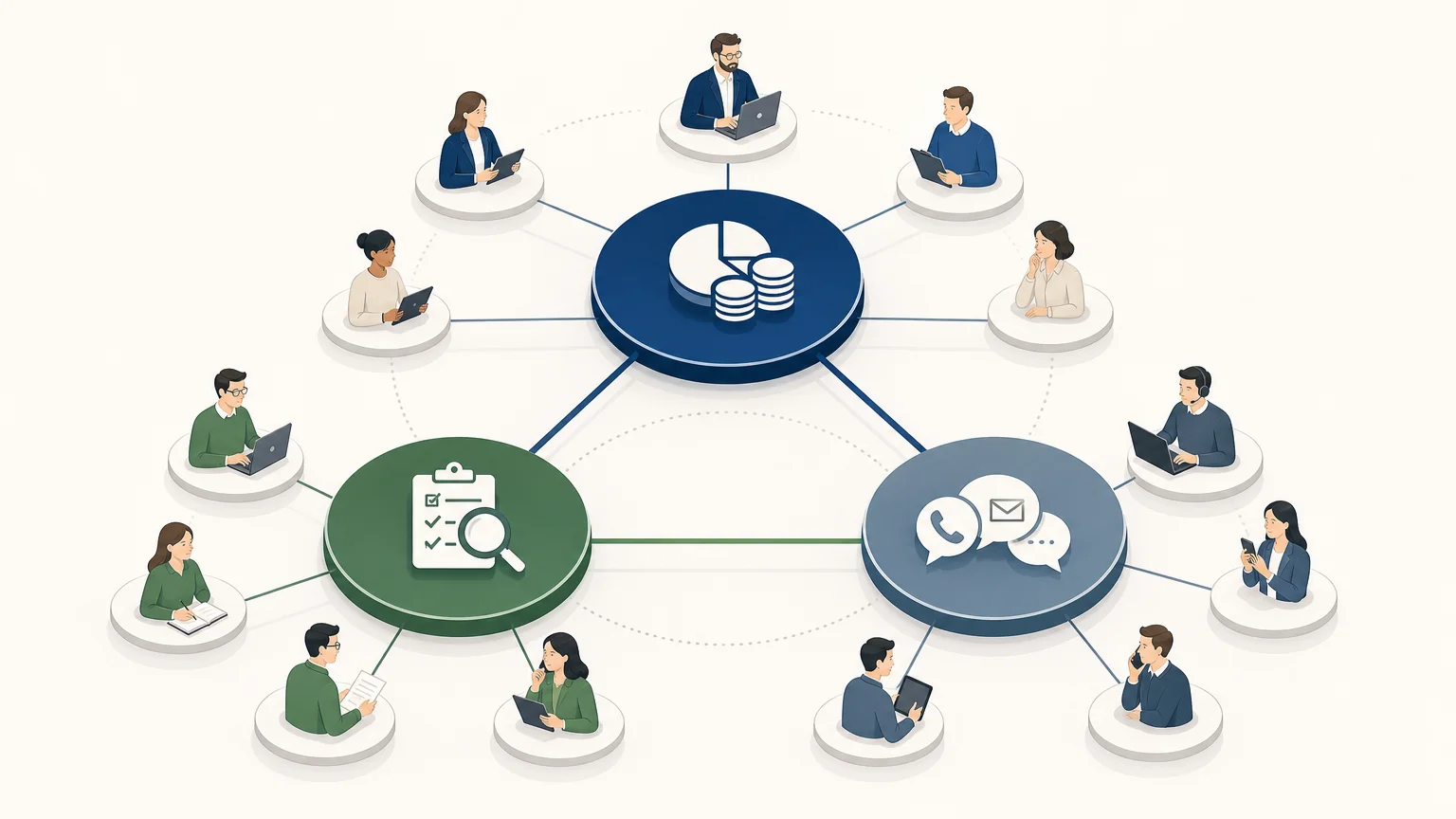
Who can genuinely say yes to your offer, and who can still block the decision after a promising meeting? In B2B, the answer isn't always found in the title displayed on LinkedIn. To identify B2B decision-makers, you need to connect business responsibility, budget, the buying process, and the people who influence the decision.
Professional buyers now use multiple touchpoints before choosing a vendor. According to McKinsey's 2026 survey, conducted with nearly 4,000 decision-makers in 13 countries, B2B buyers use an average of 10 channels during their journey. Your goal, therefore, is not just to find a name, but to understand who is involved, when, and why.
A key decision-maker isn't necessarily the executive
A key decision-maker is the person whose approval is necessary or crucial for a purchase to be validated. This person could be an executive, a department head, a purchasing manager, or a financial executive. In a small company, several functions may be concentrated in the same individual. In a larger organization, they are typically distributed among several contacts.
The first distinction to make concerns formal authority. The economic buyer controls or commits the budget. The final decision-maker validates the purchase. The influencer guides the evaluation without necessarily being able to sign. The internal champion advocates for the project to colleagues. The gatekeeper, or process guardian, controls access, requirements, or administrative steps.
| Role | Primary Responsibility | Question to Clarify |
|---|---|---|
| Economic Buyer | Arbitrates spending and expected return | Who can release the budget? |
| Final Decision-Maker | Validates or rejects the purchase | Who gives the final approval? |
| Influencer | Evaluates, recommends, or expresses an objection | Who can change the internal preference? |
| User | Uses the solution and assesses its operational value | Who will adopt it daily? |
| Gatekeeper | Verifies access, compliance, or process | What validations are mandatory? |
The same contact may hold multiple roles. A founder can be a user, decision-maker, and buyer. In a mid-sized company, the business owner might champion the project, while the finance department or purchasing holds validation authority.
Start with the ICP before seeking contacts
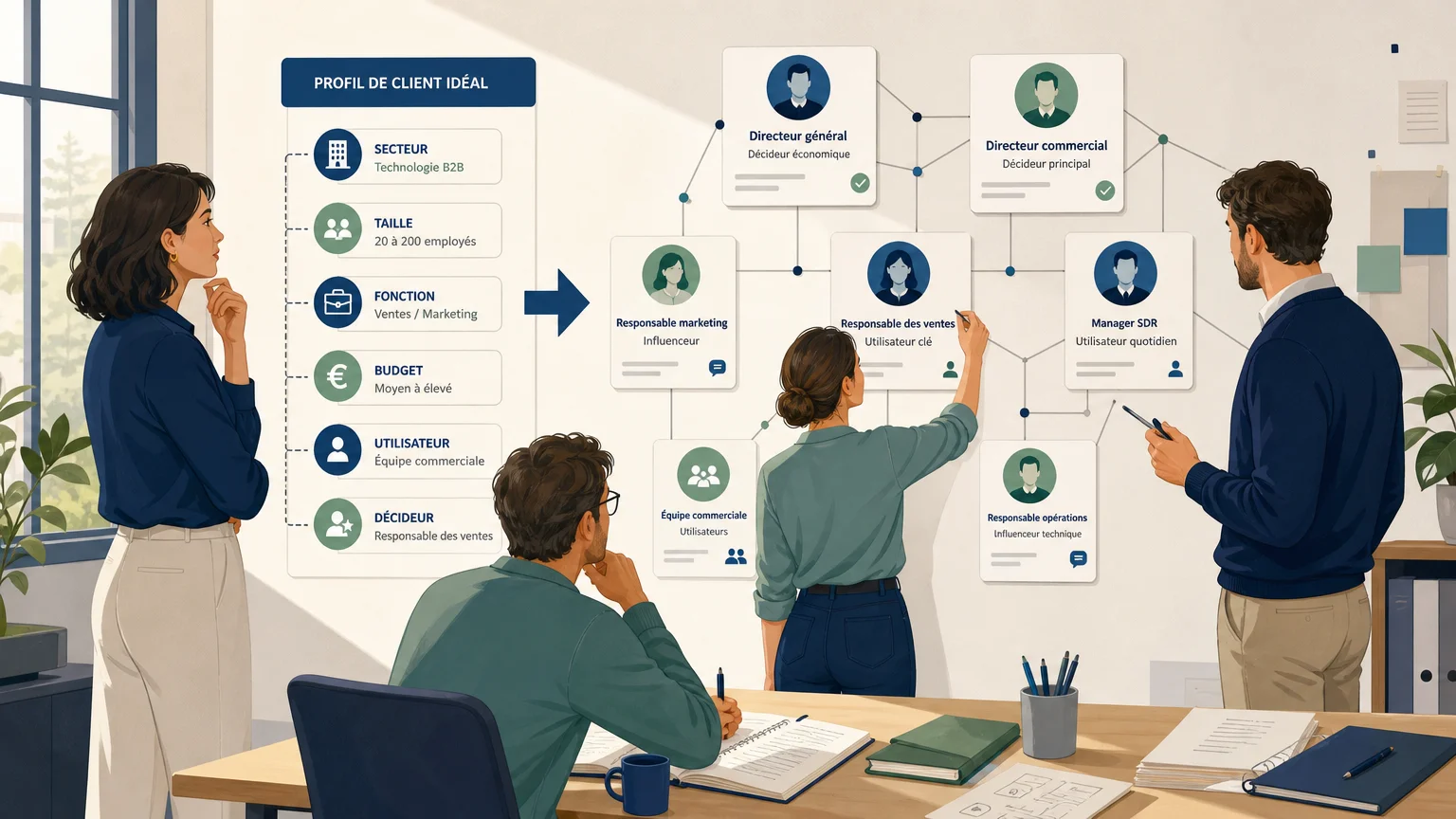
Searching for decision-makers before defining target companies often produces a large but unusable list. The most reliable method is to start with your ideal customer profile (ICP), then determine which roles typically intervene in a similar decision.
First, describe the company's criteria: industry, size, geographic area, maturity level, business model, and the problem it faces. Then add the buying process criteria: offer value, perceived risk, number of departments involved, technical constraints, and required commitment level.
This step helps avoid a common mistake: applying the same job title to all companies. A small structure might entrust the matter to the CEO or operations manager. A large organization may distribute the decision among a business unit, finance, purchasing, technical teams, and users.
Once the ICP is defined, normalize similar titles. "IT Director," "CIO," "IT Manager," and "CIO" may correspond to comparable scopes, but not always to the same authority. Titles therefore serve as starting points, never definitive proof. To reduce this sorting work, automating decision-maker identification can help match company data, roles, and available signals, provided human validation is maintained.
Ask questions that reveal actual authority
A convincing profile doesn't guarantee you're talking to the right person. Qualification must confirm the contact's role in the decision, their level of influence, and the remaining steps before purchase.
The following questions help obtain this information without turning the exchange into an interrogation:
- Who typically participates in a decision of this type?
- Who will use the solution daily?
- Who will need to approve the budget?
- Which departments must give their approval?
- How was a comparable decision made in the past?
- What conditions must be met before signing?
- Who will present the case to management or purchasing?
Wording matters. Asking "are you the decision-maker?" often prompts the interlocutor to quickly answer yes or no. A question like "who needs to be convinced for this project to move forward?" reveals more about the process structure, potential roadblocks, and people not currently in the conversation.
Also, observe concrete signals. A contact who can explain the budget, timeline, validation criteria, and people to convene generally possesses real operational influence. Conversely, an interlocutor who likes the solution but cannot organize the next step is probably an influencer or user, not the economic buyer.
Map the buying committee instead of depending on a single contact
Imagine a business manager convinced by your offer, but unable to get approval from finance or IT management. The relationship seems to be progressing, yet the decision remains stuck. This is the risk of single threading, which involves building the entire opportunity around one person.
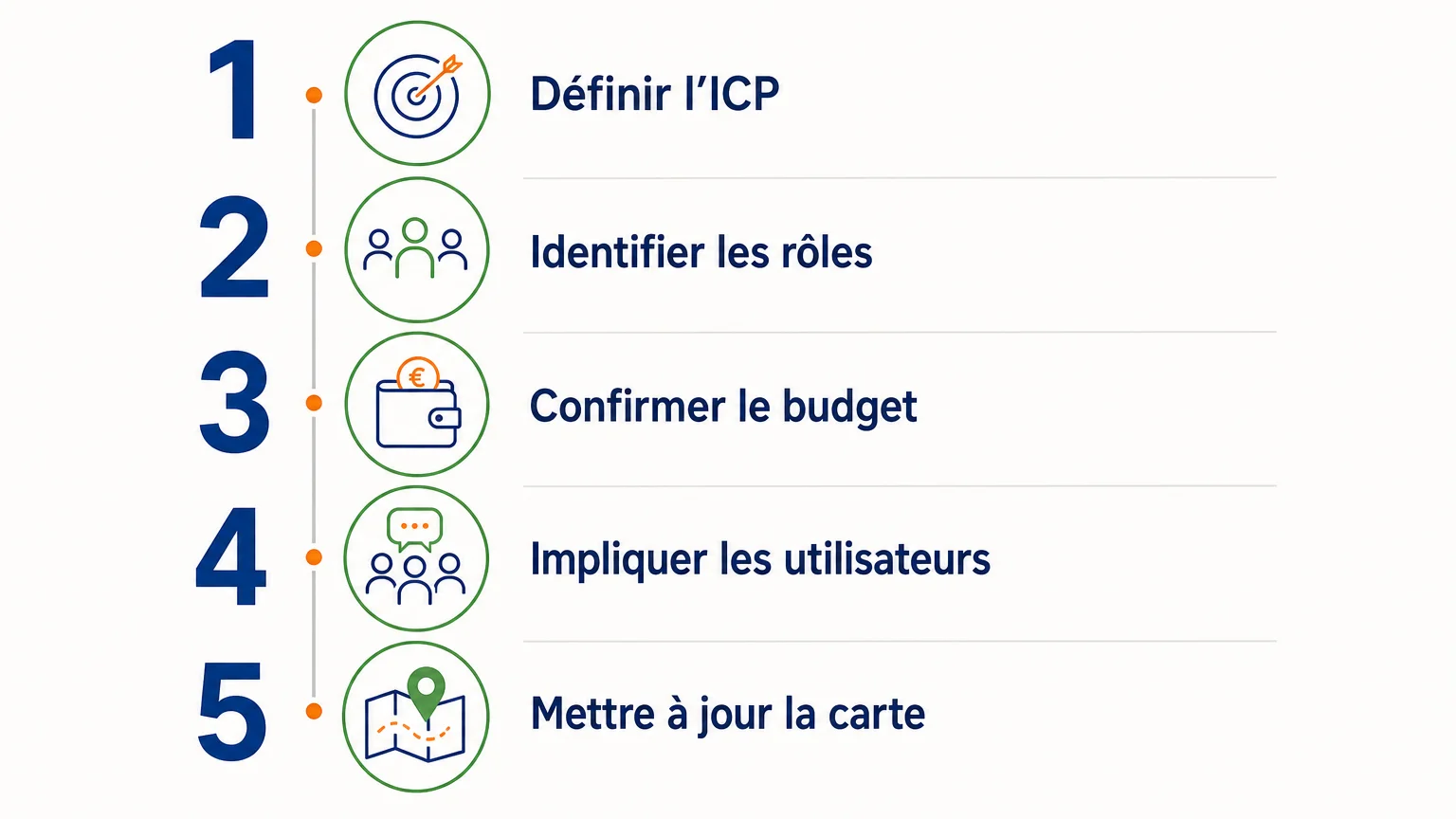
Stakeholder mapping involves noting, for each account, the role, level of influence, interest, objections, relationship with other contacts, and planned next action. It shouldn't merely reproduce the official organizational chart. Informal relationships, recognized expertise, and the ability to slow down the project are often decisive.
This approach is especially useful as buying groups become larger. In its 2026 analysis, Forrester estimates that a typical decision can involve 13 internal stakeholders and 9 external influencers, with a growing role for purchasing. These figures refer to a specific market study and should not be mechanically applied to every company, but they illustrate the need not to reduce an account to a single contact.
Your map can remain simple. For each person, indicate their role, level of authority, interest, current position, and the information they need. The executive will expect a strategic and financial overview. The user will look for the impact on their daily work. Technical teams will want to understand constraints, while purchasing will examine conditions, risks, and offer comparability.
Do not try to contact everyone at the same time. Start with the champion or the problem owner, then gradually expand to the economic buyer, users, and validation functions. The goal is to build sufficient consensus, not to multiply uncoordinated messages.
Adapt messages to each role in the process
The same offer should not be presented identically to all stakeholders. Useful personalization isn't just about using the contact's first name or company name. It connects the message to the person's concrete responsibility.
- For the final decision-maker, highlight the impact on company priorities, the level of risk, and validation conditions.
- For the economic buyer, clarify the budget, the cost of inaction, the expected return, and the engagement terms.
- For the business influencer, explain how the solution addresses the problem they champion internally.
- For the user, demonstrate changes in daily tasks and adoption conditions.
- For the gatekeeper, provide the necessary information for evaluation, compliance, or procurement.
This adaptation also reduces internal conflicts. A Gartner survey published in 2025 indicated that 74% of B2B buying teams studied showed an unhealthy level of conflict during the decision process. Gartner's study emphasizes that content relevance alone is not enough if it does not contribute to group alignment.
Specifically, prepare materials that your champion can forward. A one-page summary, a clear comparison, an answer to technical objections, or a value calculation can help the interlocutor defend the project when they are not in a meeting with you.
The commercial relationship remains essential. Tools can speed up research, enrich contact details, and prepare messages, but they do not replace discovery, negotiation, or understanding internal dynamics. To save time on preparatory tasks, we can help you use an AI agent for prospecting, while leaving validation of actions and relationship with prospects to your team.
Keep the map updated until the decision
A map quickly becomes obsolete when a person changes positions, a budget is reallocated, or a new function joins the project. Therefore, updates must accompany each sales stage, not just occur when creating the account record.
After each exchange, record what has changed: new stakeholder, objection raised, validation obtained, next meeting, or calendar evolution. Also note any assumptions that still need to be confirmed. An honest map might indicate "economic buyer not identified" or "technical validation unknown." This information is more useful than a presumed role based on a title.
Regular monitoring allows you to measure the actual account coverage. For example, you can check if the champion is still active, if the user has been involved, if purchasing has been consulted, and if the person controlling the budget is aware of the project. The goal is not to impose a fixed number of contacts, but to cover the roles genuinely necessary for the decision.
When research, contact details, exchanges, and follow-ups are spread across multiple tools, context is easily lost. An inbox that brings together LinkedIn, email, and phone can facilitate tracking conversations and next actions. With us, prepared actions are presented for validation before execution, to maintain human control over sales approaches.
The right question isn't just "who decides?"
Identifying key decision-makers comes down to understanding how a decision is truly made. Start by defining relevant companies, distinguish budget authority from influential roles, ask direct questions, and map the people who evaluate, use, recommend, or validate the purchase. This method limits dependence on a single contact and makes your messages more relevant. Tools can accelerate research and follow-up, but human qualification remains essential to confirm the real power of each interlocutor.
Structure your decision-maker search
When identifying the right contacts takes too long, the difficulty often comes from a succession of manual tasks: defining the target, researching companies, enriching contact details, preparing messages, and tracking follow-ups.
Our prospecting agent can analyze your website or offer, deduce an ideal customer profile, search for prospects, and bring together LinkedIn, email, and phone in one inbox. Prepared actions remain subject to your validation. You can test our sales prospecting software with a free trial without a credit card, then adjust your credit volume according to your needs.
Frequently asked questions
What is the difference between a decision-maker and an influencer?
The decision-maker has the authority to validate or reject a purchase. The influencer can evaluate the solution, recommend an option, or raise an objection, without necessarily controlling the budget.
Is the executive always the key decision-maker?
No. In a small company, the executive often concentrates several roles, but in a larger organization, the decision can be distributed among business leadership, finance, purchasing, technical teams, and users.
What questions should you ask to identify the economic buyer?
Ask who validates the budget, who must give final approval, and how comparable purchases were approved. These questions help distinguish real authority from mere interest in the solution.
How many contacts should you target in a B2B company?There is no universal number. Coverage depends on the company's size, the value of the offer, the perceived risk, and the number of functions involved in the decision.
Can a tool automatically identify decision-makers?
While a tool can accelerate sourcing, enrichment, and action preparation, it alone cannot confirm a contact's true authority. With GetCalls, AI prepares the actions, and your team retains validation and the commercial relationship.