

Choosing between Clay and Waalaxy rarely means deciding between two equivalent tools. The former primarily focuses on data, enrichment, and workflow orchestration. The latter concentrates more on executing LinkedIn and email campaigns. Before making a choice, you must identify the stage that is slowing down your acquisition, then evaluate the level of sales prospecting automation truly needed. To better understand this approach, also consult our page dedicated to sales prospecting automation.
The difference becomes significant as volumes increase. Clay separates platform actions from data credits, while Waalaxy structures its offers around the number of LinkedIn invitations, available features, and Email Finder credits. In both cases, results depend on targeting, message quality, and human follow-up. The tool, therefore, does not replace commercial strategy or the relationship with the prospect.
Waalaxy or Clay: The Choice Depends on Your Priority
If your main problem is finding, enriching, and qualifying the right contacts, Clay is generally the most consistent choice. If you already have targeted lists and want to quickly launch invitations, messages, and follow-ups on LinkedIn, Waalaxy more directly addresses that need.
| Criterion | Clay | Waalaxy |
|---|---|---|
| Positioning | B2B data, enrichment, signals, and workflows | LinkedIn prospecting and email sequences |
| Sourcing | Research, audiences, and multi-source enrichment | Import from LinkedIn, Sales Navigator, or CSV |
| Enrichment | Vendor marketplace and data credits | Integrated Email Finder depending on the plan |
| Primarily via integrations and connected sequencers | Invitations, messages, and follow-ups at the core of the workflow | |
| Native sequencer or specialized integrations | Available in the Business plan | |
| Learning Curve | Higher for advanced workflows | Shorter for standard campaigns |
| Pricing | Plans starting from $167 per month, with actions and data credits | Plans displayed at 19, 49, or 69 euros per user per month |
| Ideal Profile | RevOps, sales ops, or international prospecting team | Freelancer, very small business, SME, or LinkedIn-oriented team |
The indicated prices correspond to the rates consulted on September 19, 2026. They may evolve and should be compared based on actual consumption volume, necessary options, and any complementary tools.
The Structural Difference Between Clay and Waalaxy
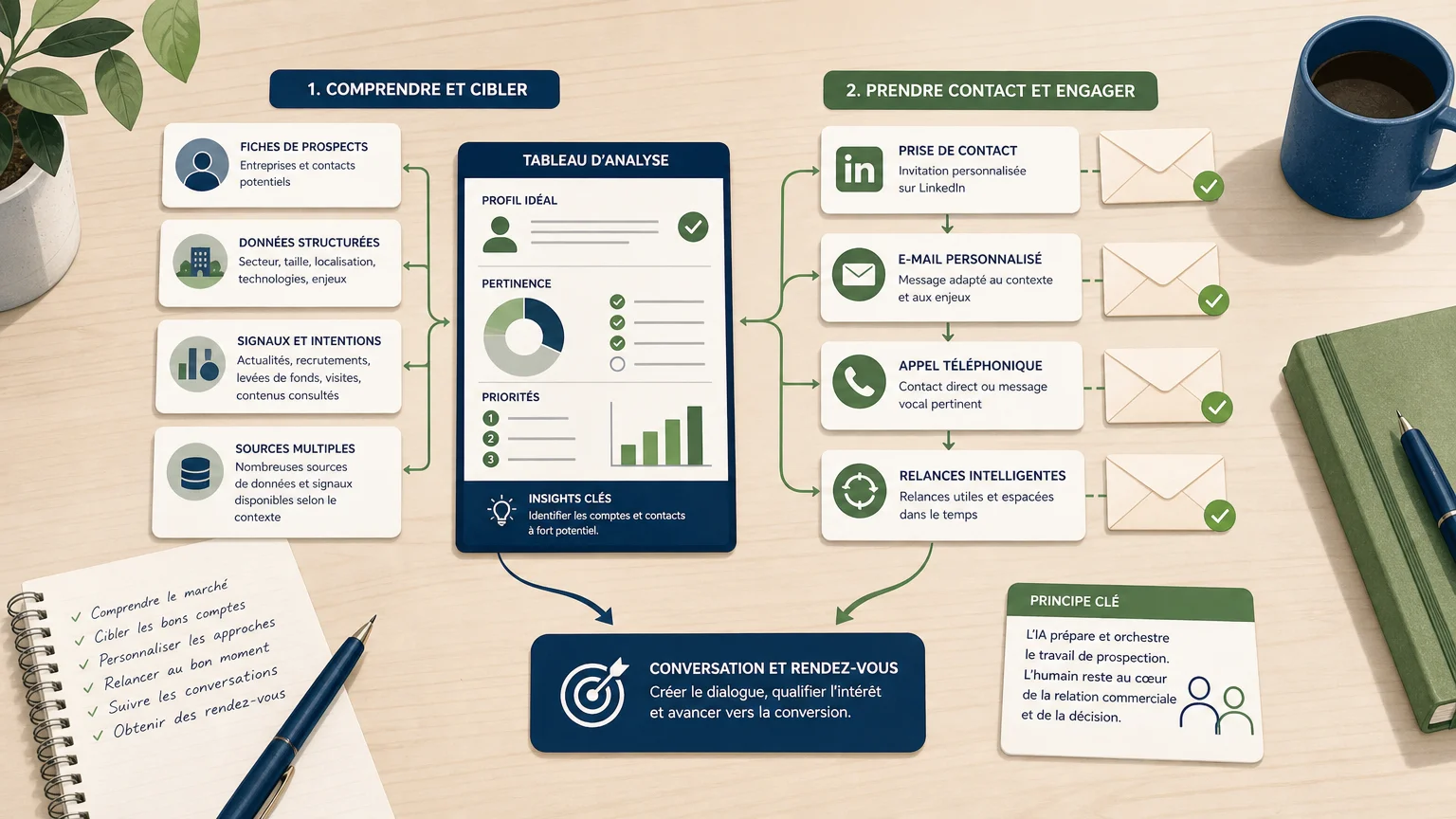
Imagine a team with 2,000 contacts, but half of them don't have a usable email address, and their information is outdated. Their primary problem is data. Conversely, a team might have a relevant list but spend several hours each week sending invitations, writing follow-ups, and tracking responses. Their problem, then, is execution.
Clay is primarily situated upstream of the journey. The platform can search for profiles, enrich contacts, analyze signals, and apply qualification rules. It also allows for reusing workflows and connecting data to a CRM, a data warehouse, or a sending tool. Its Sequencer is geared towards cold email campaigns, while LinkedIn campaigns generally go through dedicated tools or integrations.
Waalaxy is more focused on the moment of contact. The tool allows prospects to be imported from LinkedIn, Sales Navigator, or Recruiter Lite, then to create sequences with invitations, messages, follow-ups, and emails depending on the plan. Its appeal lies in the simplicity of transitioning from a LinkedIn search to an actionable campaign.
Clay
Ideal for: teams looking to build a qualified prospecting database, leverage multiple data sources, and automate search, enrichment, or scoring rules.
Clay functions as an orchestration layer between sales data and execution tools. The platform offers a marketplace of numerous data providers, AI-powered enrichments, signals like job changes or new hires, and reusable workflows. It can also send data to CRMs, sequencers, or advertising platforms.
This architecture is powerful when the company has a clear process. For example, a team can search for companies matching an ideal customer profile, enrich relevant contacts, assign a score, then transfer only qualified leads to an email campaign or a LinkedIn prospecting tool. The work is more structured than a simple list import.
Pros:
- Multi-source data and enrichment in a single environment.
- Ability to create qualification, filtering, and scoring rules.
- Reusable workflows to standardize prospecting operations.
- Possible connection with CRMs, sequencers, and tools using APIs.
- Model suited for teams that want to leverage sales signals and personalize messages based on prospect context.
Cons:
- Onboarding becomes demanding as soon as workflows involve multiple conditions or providers.
- The cost depends on two distinct units, actions and data credits, which requires careful monitoring.
- Clay is not necessarily a ready-to-use LinkedIn prospecting tool. A sequencer or complementary integration may be necessary.
Waalaxy
Ideal for: professionals who want to quickly launch LinkedIn campaigns, add email follow-ups, and limit the technical complexity of getting started.
Waalaxy is designed around LinkedIn prospecting. Prospects can be imported from a LinkedIn search, Sales Navigator, Recruiter Lite, or a CSV file. The user then chooses a sequence template, customizes messages, and schedules campaign steps.
Current plans include a Pro plan at 19 euros per user per month with 300 monthly invitations, an Advanced plan at 49 euros with 800 invitations, and a Business plan at 69 euros with email sequences and 500 email-finding credits. A 14-day free trial is offered. Team options, Inbox, and synchronization must be included in the total cost calculation.
This approach suits teams that have already defined their target and message. It allows for quick testing of a campaign, observing acceptance and response rates, and then improving targeting. However, it does not automatically solve the quality of the initial list or the relevance of the commercial offer.
Pros:
- Quick to get started creating LinkedIn and email sequences.
- Ready-to-use campaign templates for initial tests.
- Direct import from multiple LinkedIn search environments.
- Automated follow-ups and campaign statistics accessible in the same space.
- More transparent pricing for a small team that knows its invitation volume.
Cons:
- Enrichment functions are more focused than Clay's multi-provider approach.
- Workflows are less suited for complex scenarios involving scoring, signals, and data routing.
- The actual cost can increase with email credits, Inbox, additional users, and the tools needed around the campaign.
Which tool to choose based on your use case?
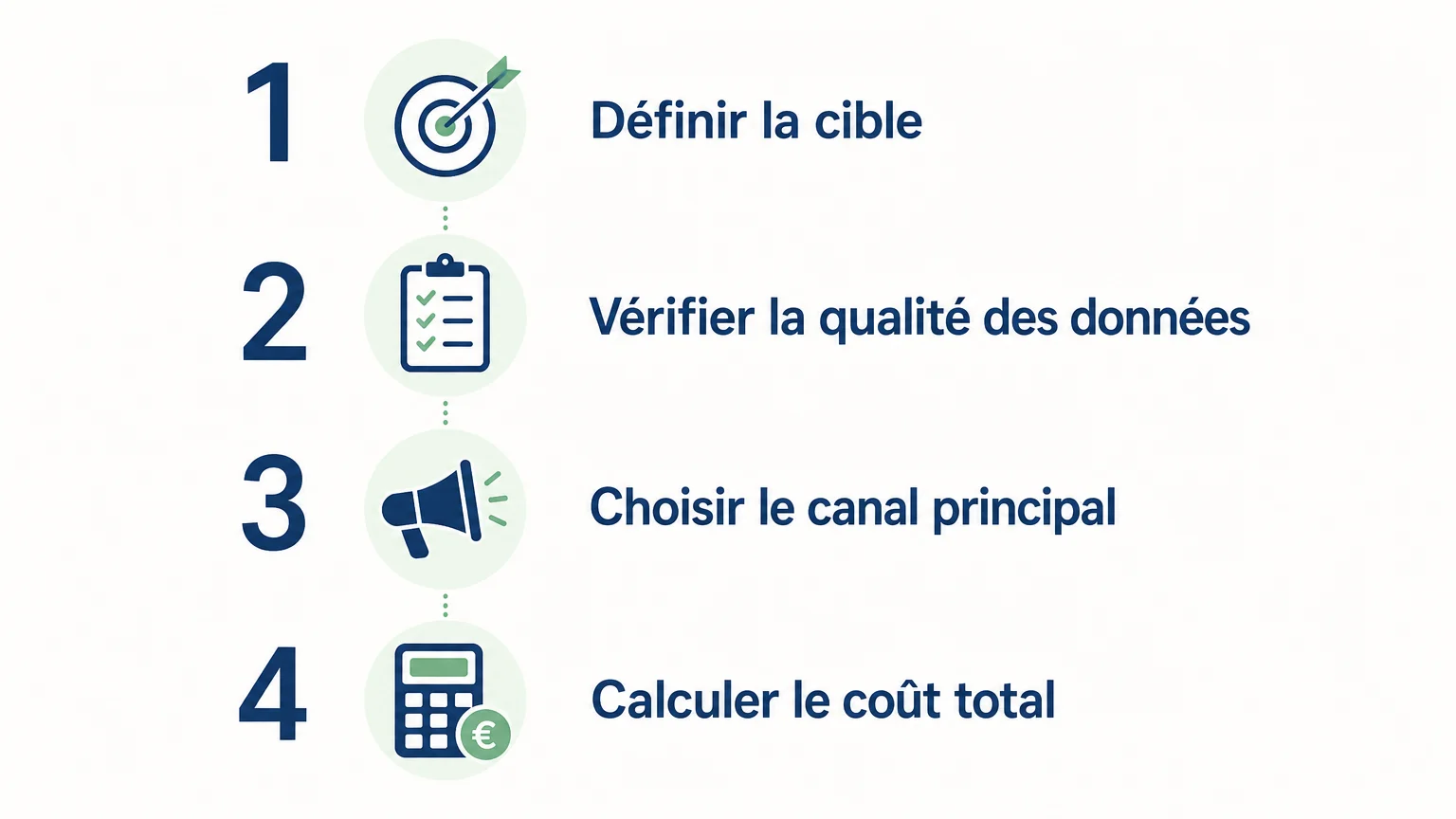
Start by looking at what your team still does manually. This step helps avoid choosing a tool for its features rather than for the problem it needs to solve.
You need to enrich a database or build a target market
Clay is the most logical choice if your priority is contact discovery, enrichment, deduplication, qualification, or leveraging signals. It gains even more value when multiple data providers need to be compared or when selection rules vary by segment.
This option, however, requires accepting a configuration phase. Without someone responsible for data, workflows, or sales operations, some of Clay’s power will remain untapped.
You want to get started quickly on LinkedIn
Waalaxy is better suited when a team already has actionable LinkedIn research and wants to automate repetitive actions. Its path is straightforward, from profile import to message sequence, with a shorter learning curve.
The key point of vigilance is targeting quality. A well-configured sequence doesn't compensate for too broad a list, a generic message, or an offer misaligned with the prospect's needs. To structure this part, our dedicated resource on LinkedIn prospecting can complement your method.
You need to work with multiple channels and multiple rules
Both tools can be used within the same chain. Clay can prepare, enrich, and score contacts, then transfer a selection to Waalaxy or another execution tool. This combination is relevant when the team is willing to manage multiple subscriptions and synchronization between systems.
It becomes less attractive when the priority is to reduce the number of tools. In this case, compare the cost of licenses, credits, maintenance, exports, and the time spent monitoring the workflow.
Total cost matters more than the advertised price
A monthly subscription represents only a fraction of the bill. For Clay, you need to examine the number of actions, data credits, providers used, and any integrations. The platform currently offers a limited free plan, then Launch and Growth plans starting at $167 and $446 per month, with distinct action and credit volumes.
For Waalaxy, the calculation is based more on the number of users, the chosen plan, included invitations, Email Finder credits, the Inbox, and team features. The Business plan may be relevant for omnichannel use, but you need to check if the volume of email searches matches your actual pace.
Therefore, use three simple indicators: the cost per truly actionable prospect, monthly maintenance time, and cost per qualified conversation. The lowest price is not necessarily the most advantageous if your team has to multiply exports, verifications, and complementary tools.
Data, LinkedIn automation, and team responsibility
Automating an action does not remove the company's responsibility. LinkedIn's terms of use specifically prohibit the use of robots, scripts, or unauthorized automated means to access the service, retrieve contacts, or send messages. Before deploying a campaign, consult the LinkedIn User Agreement and assess your level of exposure.
In terms of data, sourcing and enrichment must also comply with the rules applicable to B2B prospecting. The CNIL reminds us that reusing data published online requires examining the reasonable expectations of individuals, the information provided, and the legal basis for processing. Consult its recommendations on data published online.
When an individual objects to direct prospecting, this objection must be taken into account. European law stipulates that data must no longer be processed for direct marketing purposes after an objection, as reminded by Article 21 of the GDPR. The tool must therefore be part of a process for managing consents, objections, and exclusion lists.
What if your needs go beyond choosing between Clay and Waalaxy?
Clay and Waalaxy address two different stages. If you're looking for an integrated workflow that covers sourcing, enrichment, message preparation, follow-ups, and multi-channel tracking, we offer a different approach.
Our agent analyzes a company's offering, helps deduce the ideal customer profile, searches for prospects, enriches contact details when available, and prepares actions in an inbox that consolidates LinkedIn, email, and phone. AI-prepared actions are presented individually for validation before execution, while LinkedIn invitations can be automated based on chosen settings. To learn more about how this works, visit our page dedicated to the AI prospecting agent.
Our model operates on credits, with an adjustable or cancellable volume and no commitment. The free trial is offered without requiring a credit card, and 500 credits are unlocked after account setup and validation of a first campaign. This approach can suit teams looking to limit tool sprawl while maintaining human validation on sales actions.
Conclusion
Waalaxy or Clay doesn't represent a duel between two identical solutions. Clay is more relevant for structuring data, enriching lists, and creating advanced workflows. Waalaxy is better suited for a team that wants to quickly launch LinkedIn and email campaigns from an already defined target audience. If your priority is to bring sourcing, enrichment, preparation, and follow-up into a single environment, also evaluate the operational cost of an integrated platform. If you are comparing tools more broadly, our selection of the best prospecting software for small businesses widens the comparison. In any case, choose based on your bottleneck, your configuration capacity, and the level of control you wish to maintain.
A more integrated prospecting workflow
If your team is juggling contact research, enrichment, messages, and follow-ups, the problem might be less about choosing a sequencer and more about workflow fragmentation.
We bring together LinkedIn, email, and phone in a shared inbox, with AI-powered sourcing, enrichment, and action preparation. You can validate each action before execution, adjust your credit volume, and start with a free trial without a credit card. Discover our sales prospecting software.
Frequently Asked Questions
Are Clay and Waalaxy interchangeable?
No. Clay primarily focuses on data, enrichment, and orchestration, while Waalaxy emphasizes LinkedIn and email campaigns. They can, therefore, be complementary in the same prospecting chain.
Which tool is simpler to start with?
Waalaxy is generally more straightforward for launching a first LinkedIn campaign from an existing list. Clay becomes more demanding when you configure multiple sources, conditions, enrichments, and integrations.
Which tool should a RevOps team choose?
Clay is often better suited for a RevOps or sales ops team that needs to build data workflows, manage qualification rules, and connect multiple systems. Waalaxy can then be used to execute part of the sequences based on the chosen channel.
Which tool is best for LinkedIn prospecting?
Waalaxy is specifically designed around LinkedIn invitations, messages, and follow-ups. Clay can prepare and enrich audiences, but LinkedIn execution typically requires an integration or a specialized tool.
Should one choose an integrated tool over several specialized tools?
An integrated tool reduces exports, duplicates, and maintenance, but it may offer less depth in certain functions. Multiple specialized tools provide more flexibility, at the cost of higher total cost and operational complexity.