

How can you find suitable candidates without posting the same job ad everywhere? Candidate sourcing means actively searching for talent rather than simply waiting for applications. The approach depends on the role, the skills required and the target market. It is also important to distinguish this process from sales prospecting: if you are looking for business contacts rather than candidates, our prospect sourcing and enrichment strategy addresses that separate need.
An effective strategy goes beyond choosing a social network or a resume database. It connects job requirements with specific channels, a consistent approach and metrics that reveal where qualified candidates are actually being found. This structure helps focus sourcing time on the criteria that truly matter.
What is a candidate sourcing strategy for?
A sourcing strategy is a structured method for identifying, attracting and engaging people who may be a good fit for a role. It applies to active candidates, who respond to job ads, as well as passive candidates, who are not necessarily looking for a job but may be interested in a relevant opportunity.
Sourcing comes before selection. It builds a pool of profiles to review; screening and interviews then assess their suitability for the role. Making this distinction clear prevents confusion between the number of profiles identified and the number of genuinely qualified applicants.
For example, when hiring a data analyst, the requirements might combine SQL proficiency, experience with visualization tools and the ability to explain findings to non-technical teams. The strategy will specify where to look for these skills and what to check before inviting someone to a conversation.
How do you define the hiring need before searching?

Before opening a resume database or running a search, turn the hiring request into observable criteria. Separate essential skills from those that can be learned after hiring. Include the role’s context, responsibilities, expected experience level and constraints that genuinely affect the work.
A candidate brief can be just a few lines long: job title and purpose, three to five essential skills, expected proficiency, relevant professional backgrounds and factors that warrant an initial conversation. This list gives sourcers and the managers reviewing profiles a shared reference point.
Avoid vague criteria such as “excellent interpersonal skills” unless they are tied to specific situations. For a recruitment role, for example, specify instead that the person will need to conduct structured interviews and clearly communicate the stages of the process. Explicit criteria make searches more consistent and limit decisions based on impressions.
Which channels should you choose for your target profile?
The right channel is one that reaches your target candidates with an appropriate level of effort. Job ads, professional networks, previous applications, employee referrals, professional communities and resume databases can complement one another. For hard-to-find or specialist talent, combine direct sourcing with channels where those professionals discuss their field.
In its 2026 study of professional and managerial hiring practices, based on a survey of 1,150 companies that had hired at least one professional or manager in 2025, Apec reports that 84% of companies used a job ad for at least one such hire. For 54% of them, job ads were the channel that most often helped them find the person they hired, according to the 2026 Apec barometer. These findings apply to the professional and managerial hires studied, but they show why a sourcing approach should not rule out job ads.
To tailor searches to the location and occupation, consult relevant labor market data as well. France Travail’s BMO survey recorded nearly 2.3 million planned hires in 2026, down 6.5% from 2025. These hiring intentions provide context on reported needs, not a guarantee that a specific role will be filled; the 2026 BMO survey lets you explore them by sector and occupation.
Evaluate each channel based on the quality of the profiles it produces, the time required and how easily it enables relevant conversations. A widely distributed job ad can work well for a role that attracts many applicants; targeted searches and employee referrals can complement the approach when the requirements are specialized. Your own results will help you find the right balance.
How do you reach out without sending generic messages?
An initial message should give the person a concrete reason to consider the opportunity. Briefly introduce the role, explain why their experience seems relevant and suggest a simple next step, such as a short conversation. Avoid vague compliments or descriptions that could apply to anyone.
Before contacting someone, review their background and identify a professional detail relevant to the role. For example, your message might reference their experience in a particular sector or with a specific skill, then describe the proposed role in one sentence. This personalization must remain accurate and should not imply that you know more about the person than the available information supports.
Clarity also matters in candidate relationships. In an article published in 2024, Le Monde reported findings from an Apec study on the information candidates expect before the hiring process, including the job description, compensation and process stages. This analysis of candidate expectations highlights the value of clearly explaining the purpose of the conversation and what will happen next.
Which metrics should you track to improve sourcing?
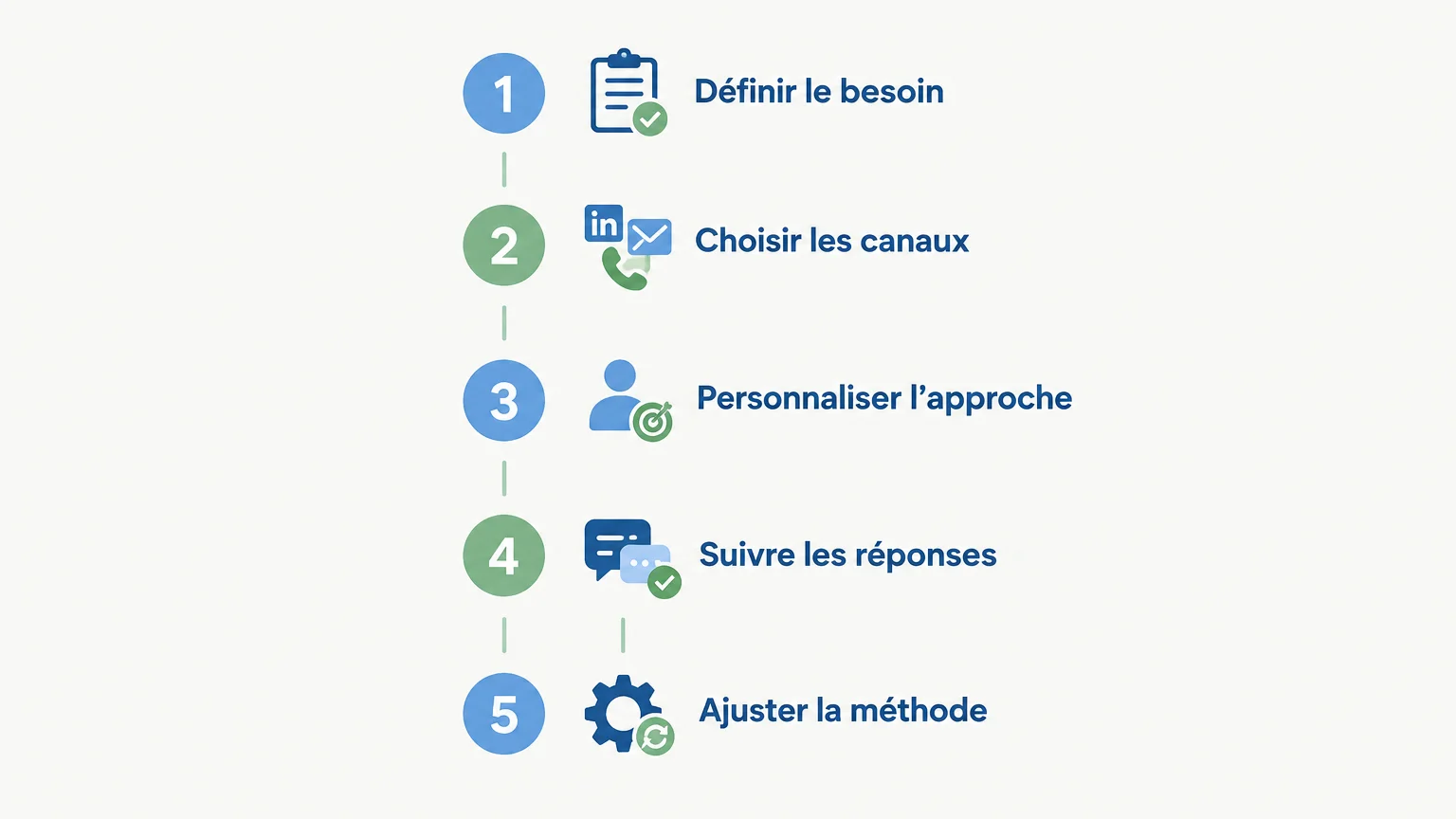
A tracking dashboard should support decisions, not just count names added to a list. For each channel, record the number of profiles reviewed, those meeting the essential criteria, people contacted, responses received and interviews initiated. Use the same definitions across channels to make meaningful comparisons.
Also track the time between launching a search and presenting an initial shortlist of suitable candidates. If a source generates many names but few suitable applicants, revisit your targeting or reduce the time spent on that channel. If the profiles are a good fit but response rates are low, look instead at the relevance of your message and the terms on offer.
There is no universal threshold that makes a channel effective for every role. Compare results against your own hiring history, accounting for how hard the profile is to find, the location and the timing. After each hire, record the sources that helped identify the successful candidate and the adjustments to test next time.
How do you choose tools and keep the right focus?
Choose tools based on the tasks you need to complete: searching for profiles, organizing a talent pool, tracking conversations or collaborating with hiring managers. Check that information stays clear and up to date, duplicates are managed and everyone involved knows the next action to take. A new tool will not fix unclear targeting.
Also make sure your search criteria remain tied to the skills and requirements of the role. Review the filters and messages you use, document the process stages and give candidates concrete information about what comes next. These practices support consistent candidate reviews and a clearer experience.
Finally, candidate sourcing should not be confused with sales prospecting. At GetCalls, we focus on B2B prospecting; if your goal is to identify companies that might buy from you, our article explains how to find qualified prospects.
Build a method that improves with every hire
A candidate sourcing strategy starts with clear criteria, matches channels to the target profile and tracks the quality of results through to the conversations initiated. By recording which sources work for each type of role, you can refine your targeting and approach without applying a one-size-fits-all method to every hire.
Recruiting candidates or finding prospects
Candidate sourcing uses the recruitment methods described in this article. Sales prospecting serves a different purpose: identifying relevant companies and contacts to grow a B2B business. Understanding this distinction helps you choose tools that fit your needs rather than confuse two different processes.
For sales prospecting, we analyze your offering, help define your ideal customer profile, find prospects and prepare personalized outreach. You can review and approve the proposed actions before they are carried out. Explore our sales prospecting software if your goal is to find new customers rather than recruit.
Frequently asked questions
What is a candidate sourcing strategy?
It is a method that defines the profiles to look for, the channels to use and how to engage the people identified. It differs from selection, which evaluates candidates afterward.
What is the difference between sourcing and recruitment?
Sourcing identifies and attracts people who may be a good fit for a role. Recruitment also includes selection, interviews and the hiring decision.
Which channels can you use to source candidates?
Job ads, professional networks, previous applications, employee referrals and professional communities can be combined according to the role. Compare their ability to uncover suitable candidates, not just the volume they generate.
How do you measure sourcing effectiveness?
For each channel, track the number of suitable profiles, responses, interviews initiated and the time needed to present a shortlist. These metrics help identify whether an issue stems from the targeting, the channel or the message.
Is GetCalls a candidate sourcing tool?
No, GetCalls focuses on B2B sales prospecting, not recruitment. Our tool helps you find business prospects and prepare outreach activities.