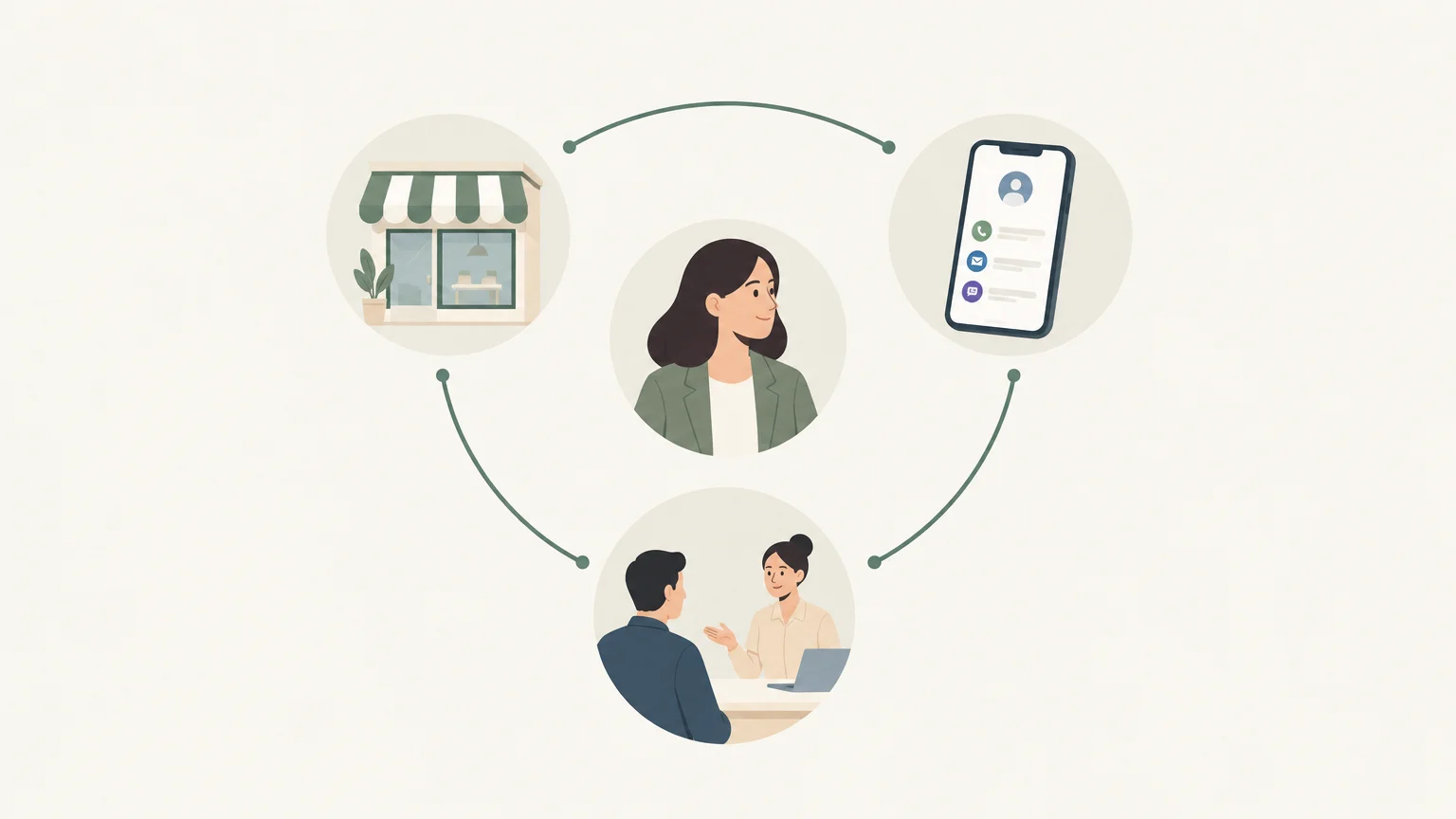
A customer starts a process on a website, continues in-store, and then contacts customer service. Does their journey remain consistent at every step? An omnichannel strategy is designed to deliver exactly that continuity: it coordinates touchpoints rather than managing them as separate spaces. For B2B teams, consistency also applies to prospecting conversations. In particular, we explore how to automate sales prospecting without confusing that process with an entire omnichannel strategy.
Simply being present on multiple channels is not enough. Customers should be able to move forward without repeating the same information, receiving contradictory messages, or starting over. To achieve this, companies need to consider the journey as a whole, the information shared, and each team’s responsibilities. The approach depends on the business: a retailer might connect its store and website, while a service company might coordinate online conversations, phone calls, and interactions with its sales teams.
Omnichannel, multichannel, or cross-channel: what’s the difference?
Does a company that uses a website, a store, and social media already have an omnichannel approach? Not necessarily. A multichannel strategy creates multiple touchpoints, but they may operate independently. As a result, customers may encounter different information or interaction histories depending on the channel they choose.
A cross-channel approach connects specific channels to enable a particular action, such as reserving an item online and collecting it in-store. An omnichannel approach goes further: it organizes channels as parts of a single journey. The goal is to maintain a consistent experience, even when someone switches channels or speaks to a different team member.
A practical definition can help clarify the distinction: an omnichannel strategy connects channels around the customer journey so that relevant information follows people as they move between them. In its report published in 2026, the OECD states that 19 of the 36 member countries studied had an omnichannel strategy for public services, based on 2025 data. This figure concerns public administrations, not businesses, but the definition emphasizes principles that apply more broadly: continuity between channels and a consistently high-quality experience. See the OECD report.
The real test: moving seamlessly between channels
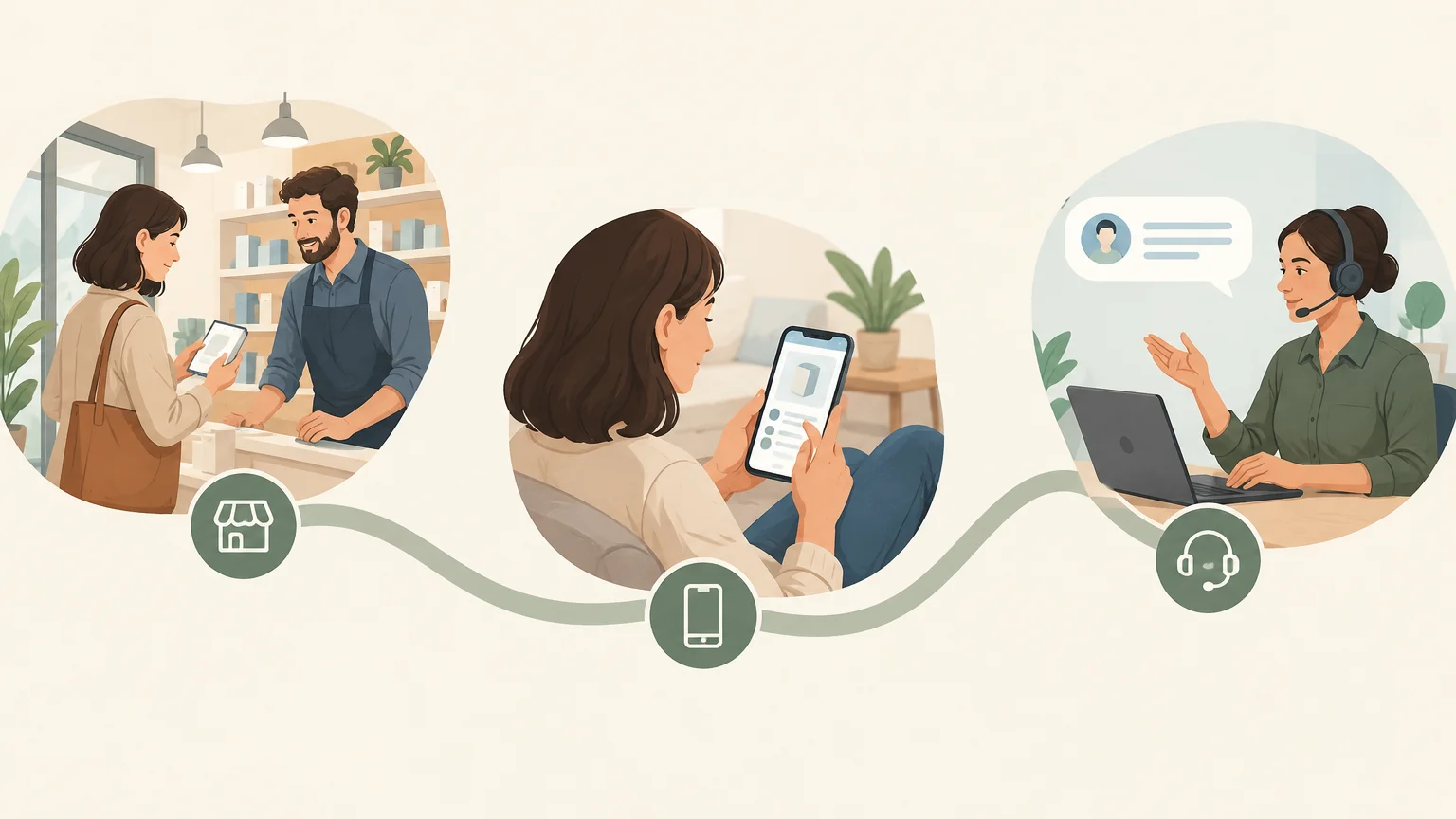
Imagine a customer who discovers a product on her phone, checks it out in-store, and then calls for more information. The transition is smooth if useful information is available at every step, the stated terms remain consistent, and she does not have to tell her whole story again. This journey illustrates journey continuity: each channel picks up where the previous one left off rather than starting from scratch.
Continuity does not mean every channel must offer exactly the same features. A store may let customers try items on, while a website makes comparison easier. Instead, define the role of each touchpoint, what information it has about the journey, and where it directs the customer next. Handoffs must make sense to customers and be manageable for teams.
This coordination also comes with operational costs. A survey published by MIT’s supply chain laboratory in May 2026, involving 647 managers, found that nearly 80% of respondents reported implementing or planning omnichannel distribution strategies. The sample covers supply chain managers, mostly from large organizations, and does not represent all businesses. The MIT report highlights a practical consideration: connecting channels also requires organizing the operations that support the experience.
How to build an omnichannel strategy step by step
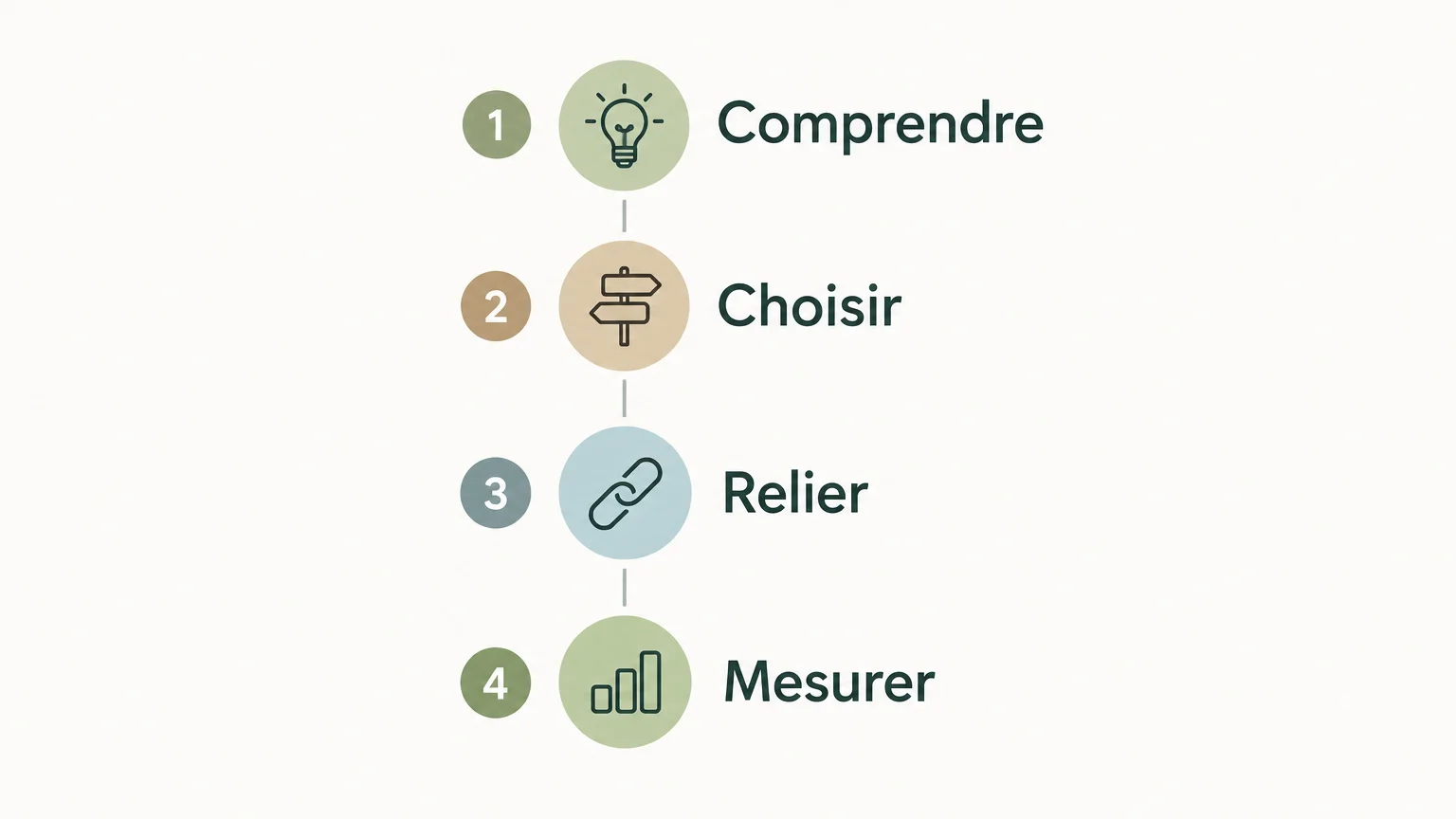
The starting point is not buying a new tool, but identifying a specific problem in the journey. Take a gradual approach, connecting the channels that play a meaningful role in that experience.
- Map the journey. Identify the stages and touchpoints, from discovering your offering to after-sales support. Note where customers switch channels, repeat information, or encounter obstacles.
- Understand customer needs. Draw on customer feedback, incoming questions, and team observations. Distinguish stated preferences from observed behavior, then identify recurring needs.
- Choose relevant channels. Select those that meet a specific need and that the company can maintain effectively. Omnichannel is not about being everywhere, but about making touchpoints useful and consistent.
- Connect information and teams. Define which data is needed for the next stage of the journey, who can access it, and who takes over. Establish shared guidelines for tone, offers, responses, and handoffs.
- Test, then refine. Start with a priority journey or transition. Check with customers and teams that the handoff works, then gradually expand what delivers meaningful improvements.
In B2B prospecting, this approach can help maintain continuity across conversations on LinkedIn, email, and the phone. To help structure this activity, our outbound prospecting workflow focuses specifically on organizing prospecting stages, rather than coordinating every channel a company uses.
Measure the overall experience and fix gaps in the journey
When assessing performance, a conversion rate for each channel is not enough to understand a journey that spans multiple touchpoints. You need to track cross-channel metrics selected to match your objective: resolution rates without customers having to repeat information, time between stages, abandonment after a handoff, satisfaction after an interaction, or journey completion rates. These measures are more valuable when supported by qualitative feedback that explains why a transition works or fails.
An article from La Poste updated on July 28, 2026, recommends assessing omnichannel performance as a whole rather than isolating each channel’s results. This approach helps identify situations where a channel appears to perform well on its own, but the full journey still involves friction. The La Poste analysis focuses on B2C performance. For any business, the principle remains the same: connect metrics to the actual journey being studied and account for each channel’s role.
For a sales team, the goal may be more focused: retaining the context of a conversation when prospecting moves from one channel to another. We bring LinkedIn, email, and phone interactions together in a single inbox with a shared history. Actions prepared by our AI are presented individually for approval, helping maintain human control over outreach. Our content on email prospecting explores one of these channels without claiming to cover a complete omnichannel strategy on its own.
Make consistency your measure of success
An omnichannel strategy is not defined by the number of channels you use. Its value becomes clear during transitions: can customers continue their journey without losing context, and do teams know how to take over? Map a priority journey, connect the necessary information, and measure the end-to-end experience. Then expand your approach based on the friction you observe and the resources your organization can realistically commit.
Connect your B2B prospecting conversations
Within a sales journey, coordinating outreach across multiple channels can help teams preserve the context of their conversations. This approach addresses a specific B2B prospecting need, but it does not replace the broader work required to connect every touchpoint across a company.
Our sales prospecting software brings LinkedIn, email, and phone interactions together in one inbox with a shared history. The AI prepares actions that users can approve before they are carried out. The free trial requires no credit card; 500 credits are unlocked after account setup and approval of a first campaign.
Frequently asked questions
What is an omnichannel strategy?
It is an approach that coordinates channels to keep the customer journey consistent as people move between them. It relies on shared information and processes, along with organized handoffs between teams.
What is the difference between multichannel and omnichannel?
Multichannel means a company uses several channels, which may operate independently. Omnichannel aims to connect them to ensure a consistent experience across channels.
Is click and collect omnichannel?
Click and collect connects an online channel to a physical pickup location for a specific action. It can be part of an omnichannel strategy, but this service alone does not guarantee that the entire journey is coordinated.
How do you measure an omnichannel strategy?
Choose metrics tied to the complete journey, such as abandonment during a handoff, time to resolution, or satisfaction after multiple interactions. Complement the numbers with feedback from customers and teams to understand what causes friction.
Is a prospecting tool enough to make a company omnichannel?
No. A prospecting tool can help coordinate sales conversations across certain channels without covering every customer journey or business operation. Our GetCalls prospecting agent centralizes LinkedIn, email, and phone interactions within the B2B prospecting workflow.