
How do you prepare a sales message that feels written for one person, not an entire list? It starts with a specific reason to reach out and a useful idea to share. For subsequent touchpoints, our approach to writing sales follow-up messages helps keep the conversation consistent.
Preparing sales messages in B2B means connecting a verifiable business need to a clear proposal, then choosing an appropriate channel and next step. It goes beyond filling in a template or adding the recipient’s first name. A relevant message explains why you are writing to this person, why now and what they can do next.
What should you prepare before writing a sales message?
Before you write, ask yourself a simple question: what makes it worth contacting this person today? If you cannot answer in one specific sentence, you probably need more research or qualification.
Next, define four things: the recipient’s professional role, the need your offering addresses, the fact that makes your outreach relevant and the action you want to suggest. A useful signal could be a company announcement, a change in its business or a challenge linked to the person’s role. Avoid presenting assumptions as established facts.
This groundwork clarifies your value proposition. Rather than describing everything your company does, choose a benefit that matters to this prospect and support it with something concrete. For example, if you are contacting a sales manager about a prospecting process, explain the specific problem you think you can help them explore. Do not promise results you cannot substantiate.
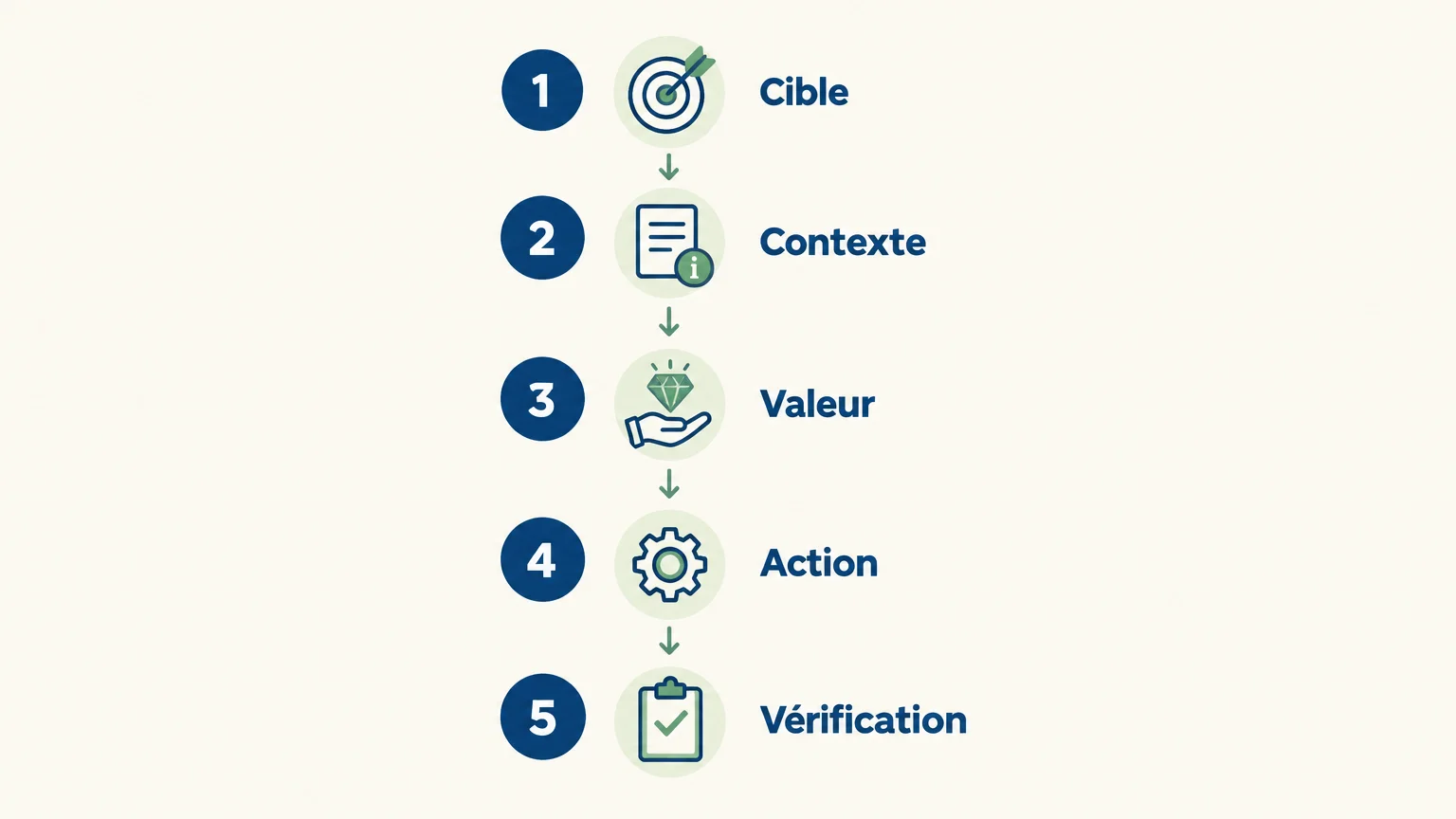
Before drafting the message, put together a short brief:
- Target: role, industry and relevant responsibilities.
- Context: verified information that explains why you are reaching out.
- Value: a concrete benefit tied to that context.
- Action: a question, a conversation or a next step that is easy to accept or decline.
Personalize using verifiable context
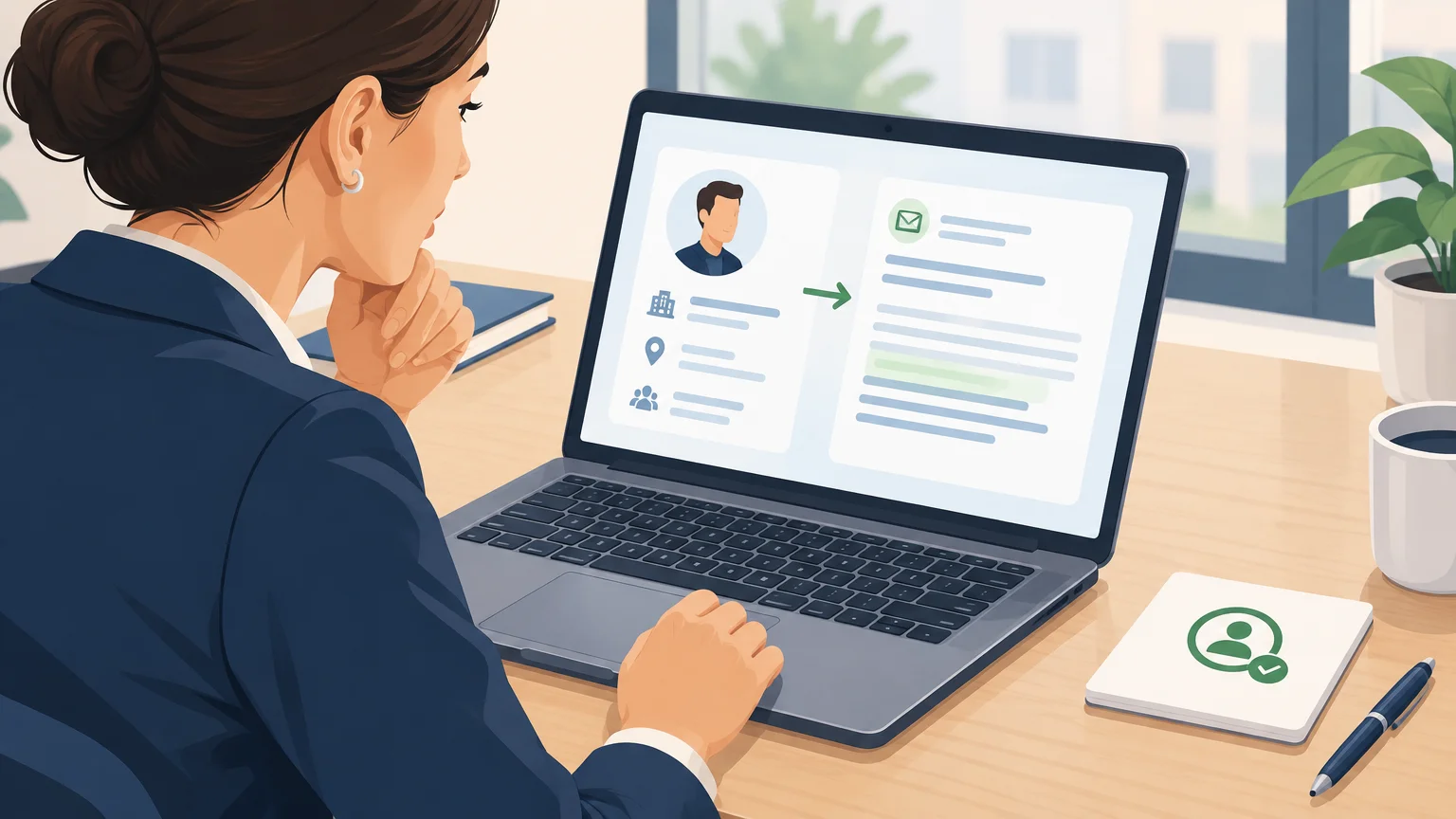
Suppose a company announces a new office opening. That fact could give you a reason to contact someone in business development, provided you connect the news to a question or challenge relevant to their role. Personalization means showing that connection, not piling on details that add nothing to the conversation.
An overly generic message might say: “We help companies improve their sales.” A more focused approach explains why the offering might be relevant to the company and asks a short question: “I saw that you’re expanding into a new region. How are you approaching outreach to local businesses?” The question opens a conversation without claiming to know the recipient’s internal priorities.
France Num describes use cases in which AI analyzes a company’s and a contact’s context to prepare personalized messages for email or LinkedIn. This writing support is still only a starting point: the sales representative must check that the information is relevant and stay in control of the conversation. France Num’s use cases illustrate this approach.
At GetCalls, our prospecting agent analyzes a website URL, a catalog or an offering description to understand the positioning and infer an ideal customer profile. It prepares personalized messages and follow-ups, then presents each action individually for approval. AI handles the prospecting groundwork; the sales representative retains control over decisions and the prospect relationship.
Adapt the message to the channel and the next step
The same selling point needs different wording in an email, a LinkedIn invitation or a phone call. The goal, however, stays the same: give the recipient a clear reason to respond and ask for just one action at a time.
In an email, the subject line and opening sentences should get straight to the point. For example: “Subject: A question about your regional prospecting. Hello Ms. X, I saw that your team is expanding in region Y. We help sales teams prepare outreach to target companies. Is this something you’re looking to put a process around right now?” The message connects context to a question without stacking up selling points.
On LinkedIn, keep the text short and favor an opening that invites conversation over a full sales pitch. For a phone call, prepare an introductory sentence and two questions to help you understand the situation. The text then serves as a conversation guide, not a script to recite mechanically.
To organize your outreach and follow-ups, you can build an outbound prospecting workflow. If you are refining how to approach a company, our article also explains how to adapt your messaging for B2B sales. In both cases, keep the next step clear—for example, suggest a brief conversation rather than asking for several actions in the same message.
A prospecting sequence should add something new at every touchpoint: a different question, useful information or a suggested next step. Repeating the same text with a different subject line is not a genuinely contextual follow-up. If the prospect says they are not interested, stop contacting them and update their status.
Review the message and check compliance before sending
Before sending, read the message from the recipient’s perspective. Will they understand why you are contacting them? Is the proposal relevant to their business? Is the requested action clear and reasonable? If the answer to any of these questions is no, simplify the message or revisit your research.
- Check that the name, role and context mentioned are accurate.
- Remove vague compliments and wording that could apply to any company.
- Keep one main idea and a single call to action.
- Remove unverified claims and promises that are hard to substantiate.
- Make sure the person can understand who is contacting them and why.
In France, prospecting rules depend in particular on the channel and the type of recipient. For emails sent to professionals, ILBI’s legal overview published on August 13, 2026, notes that the subject must relate to the recipient’s professional activity, that they must be informed and that they must be able to opt out of outreach easily. ILBI’s legal overview covers France; check the rules that apply to your chosen channel and target country before launching any campaign.
Preparation also includes checking the data used to personalize the message. Verify where it comes from, how relevant it is to the contact and how your team handles opt-out requests. A comparison of AI prospecting tools on La Fabrique du Net highlights data collection practices as another area to review, beyond text generation alone.
If an AI tool writes the first draft, give it reliable information limited to what it needs: the person’s role, company, reason for contact and proposed benefit. Then review the output to remove invented details, unnatural language or overly pushy wording. A well-prepared template saves time; it does not replace fact-checking or sales judgment.
A useful message starts with a good reason to write
Preparing an effective sales message follows a simple sequence: choose a relevant prospect, establish verifiable context, frame a proposal around their business and ask for a clear next step. Then adapt the tone to the channel, check the facts and follow the applicable rules. Personalization is convincing when it helps the recipient see the value of a conversation without assuming you know their needs better than they do.
Prepare your outreach with GetCalls
When the challenge is not just wording but also the time spent researching each prospect, finding a relevant angle and managing follow-ups, operational support can help. At GetCalls, our prospecting agent analyzes your website URL, catalog or offering description, then prepares personalized messages and follow-ups for LinkedIn, email and phone outreach. Actions are presented individually in an inbox so you can review and approve them. The tool prepares your prospecting; it does not replace your judgment or the sales conversation.
You can get started by connecting an email inbox or a LinkedIn account, setting up your first campaign and approving the suggested actions. The trial is free, with no credit card required; 500 credits are unlocked after you set up your account and approve this first campaign. For an email-focused approach, explore email prospecting. You can adjust your credit allowance or cancel at any time, with no commitment.
Frequently asked questions
What structure should a B2B prospecting message follow?
Give a specific reason for contacting the person, connect it to a relevant benefit and finish with a question or a simple next step. Make it clear who you are and avoid piling on selling points.
Should every sales message be personalized?
Adapt each message to the recipient’s role and business context. One accurate, relevant detail is worth more than a series of references that add nothing to the conversation.
Can you reuse a message template?
Yes, a template can provide a starting structure for the subject line, opening and call to action. Replace generic elements with verified context before each send.
Which channel should you use to contact a prospect?
Choose the channel that suits your goal, the contact details available and the applicable rules. Tailor your wording to that channel rather than copying the same text everywhere.
Can AI prepare messages on behalf of a sales representative?
It can prepare a first draft using the information provided, but a person must check the facts, tone and relevance of the approach. At GetCalls, prepared actions are presented individually for approval before they are carried out.