
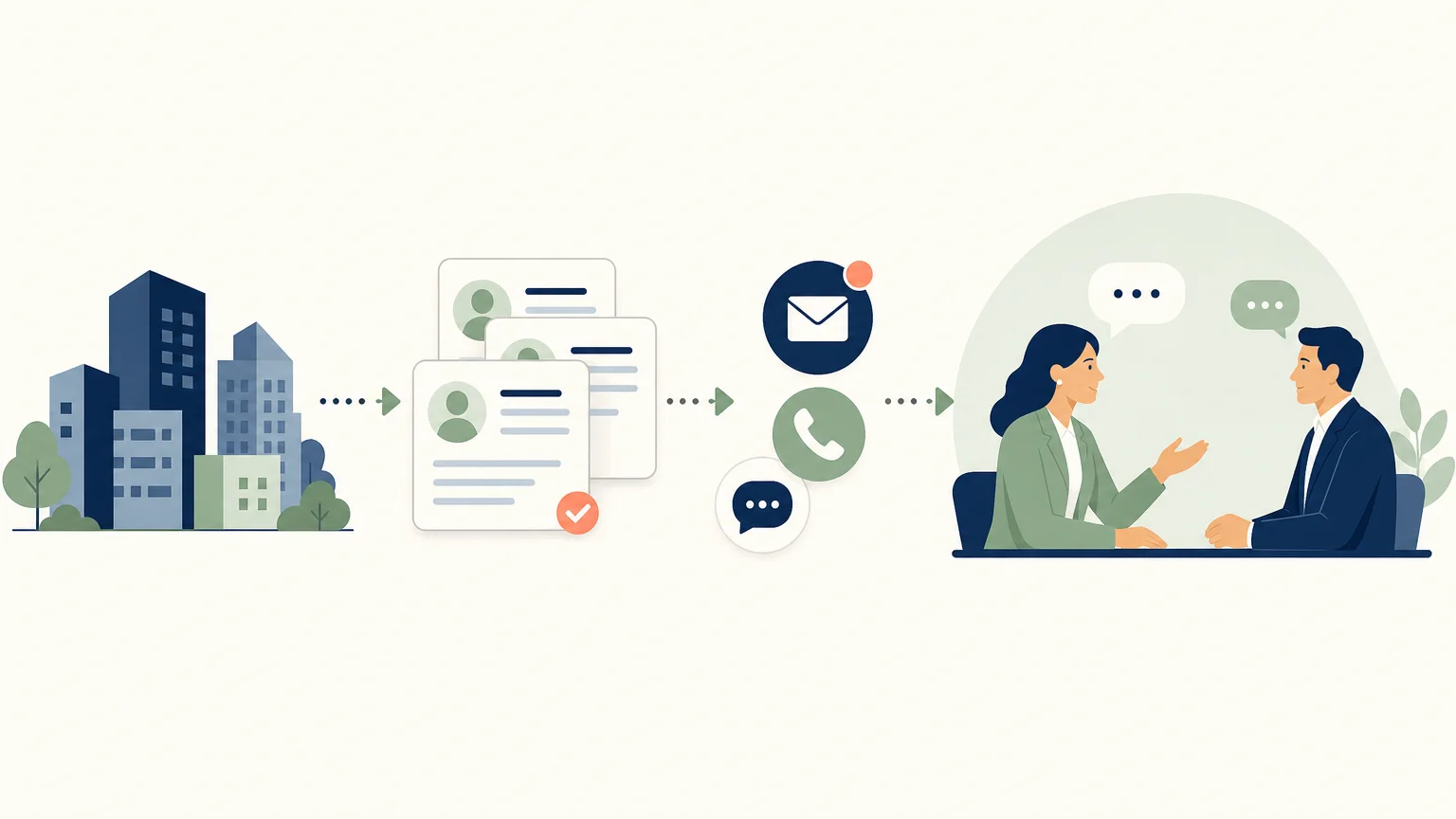
A tool can identify contacts, complete their details, or organize follow-ups, without necessarily covering the entire process. To choose a B2B prospecting software, therefore, start with the work you want to simplify, rather than a long list of features. To get an overview of the main tool categories, you can also consult our sales prospecting tools.
The difference between solutions often lies in their scope: some help build a list, others to contact prospects, or to maintain the context of exchanges. A team that chooses without distinguishing these needs risks paying for unnecessary functions or continuing to manually piece together several software solutions. The right criterion is simple: which step needs to become more regular, faster, or easier to track?
B2B prospecting software sometimes combines different building blocks

What exactly does B2B prospecting software cover? The term refers to several types of tools, sometimes integrated into a single platform, sometimes used separately:
- Sourcing helps find companies or contacts based on a defined target.
- Enrichment completes a contact record with professional contact details or information useful for qualification.
- Sequences organize initial contacts and follow-ups according to a schedule or conditions.
- Multichannel tracking helps coordinate several channels and keep track of conversations.
- CRM centralizes contacts and exchanges to monitor already engaged opportunities.
These building blocks address different problems. A contact database can help identify contacts but doesn't guarantee that messages are prepared or that responses are followed up. Conversely, a sequence tool can manage follow-ups without helping you define which companies are relevant to contact. Check the actual scope of each solution and any potential tasks that will still need to be done elsewhere.
What scope really needs to be outsourced?
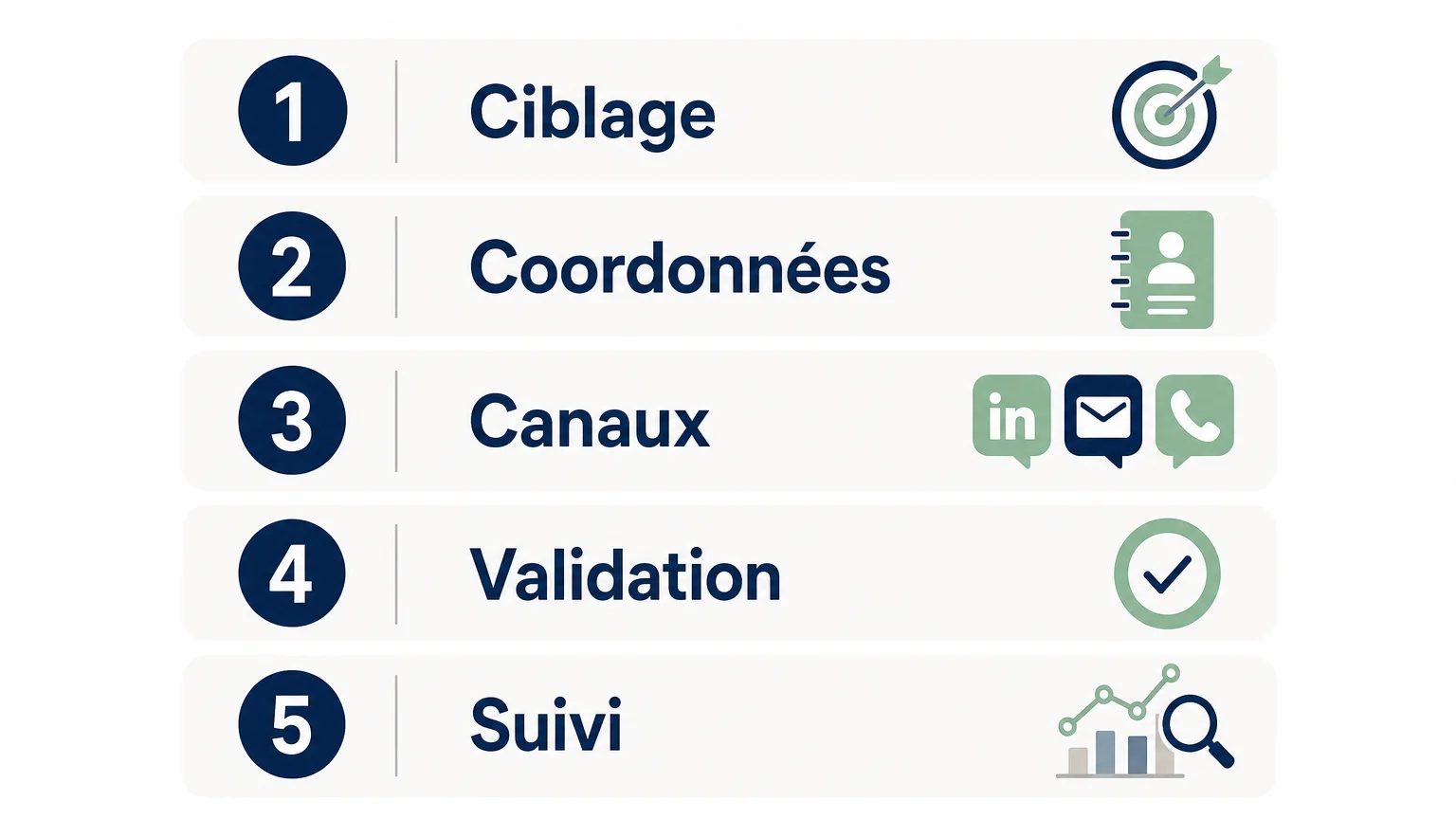
Imagine a small team that identifies its prospects in one file, searches for their contact details in another tool, then follows up from several email inboxes. Their main need might not be a comprehensive CRM: they are primarily looking to reduce the manual steps between finding a prospect and tracking their response.
To clarify your needs, describe the desired process in four steps: define the companies and contacts to target, find or complete their contact details, prepare the contact on an appropriate channel, then record the response and the next action. At each step, note what is manual, what is repetitive, and what gets lost when a team member takes over a case.
This mapping also helps distinguish useful automation from excessive automation. For example, you can entrust the tool with research or message preparation while retaining control over sending validation and conversation management. For a small structure, our analysis of the best prospecting software for small businesses helps align the choice with the team's needs and resources.
How to compare the true cost of a tool?
A monthly fee is not enough to compare two offers. Look at what it includes, potential costs related to users or data, the billing method for actions, and the configuration or supervision work that remains for your team. A cheap solution might require several complementary subscriptions; a more integrated platform, conversely, might charge based on actual usage.
At GetCalls, in 2026, 1,000 credits cost €80 excluding VAT. A LinkedIn action record consumes 1 credit, an email record with enriched and verified address consumes 3, and a phone record with enriched number consumes 9. If enrichment fails, no credit is charged. The number of contacts obtained depends on the channels used and the chosen level of enrichment: therefore, convert the price to the scenario you actually intend to use, without assuming that one credit equals one prospect.
To compare offers, request a quote for the same volume and process, then estimate the time saved and the time the team will still need to dedicate to the tool. A trial with a small group of prospects often helps verify if the cost corresponds to a concrete improvement rather than rarely used features.
Data and human control, two criteria to examine together
A contact detail found is not, in itself, proof that the contact is relevant or that a solicitation is appropriate. Ask what data the tool collects, how it is updated, what information will be visible to your team, and how opt-out requests are managed. Also, check where the data is hosted and what processing conditions apply to your organization.
In France, the CNIL specifies that B2B electronic prospecting can rely on legitimate interest when the subject of the message relates to the contacted person's profession. The person must be informed and able to easily object to prospecting. Consult the CNIL guidelines and check the rules related to each channel and your own data processing.
The level of automation is equally important. A tool can prepare messages and follow-ups, but the team needs to know which actions are sent automatically and which require validation. At GetCalls, prepared actions are presented individually for validation before execution; LinkedIn invitations, however, can be automated. If your main difficulty lies in building lists, our content on prospect sourcing and enrichment details this stage of the work.
How to test a tool before adopting it?
A useful test involves replicating a real prospecting case, rather than just browsing menus. Choose a small, representative sample of your target, then follow the same steps as during a usual campaign: prospect selection, enrichment, message preparation, and response tracking. Compare what is actually performed by the tool with what remains to be done by a salesperson.
During the test, particularly check:
- if the selected prospects match your ideal customer's criteria;
- if the available contact details are useful enough for your contact channel;
- if messages are based on verifiable elements and can be corrected;
- if a response, objection, or case transfer is correctly handled;
- if the cost is understandable given the actions and enrichment used.
Finally, ask the person who will use the tool to repeat the process without assistance. If they regularly have to export files, re-enter information, or find context elsewhere, these manipulations are part of the real cost. A relevant test doesn't guarantee commercial results, but it reveals whether the software aligns with your working method.
The right choice starts with the work to be done
A suitable B2B prospecting software is one whose scope matches your priority tasks, your channels, and the control you wish to maintain. Define the workflow, evaluate the total cost, check data management, and test the tool on representative prospects before deploying it more widely.
Structure your prospecting without losing track
If your team wants to combine research, enrichment, message preparation, and conversation tracking, a solution covering multiple steps can limit tool switching. AI can prepare the prospecting work; sales reps maintain relationships with prospects and validate actions when required.
Our sales prospecting software brings together LinkedIn, email, and phone in one inbox with a shared history. You can start with the free trial, no credit card required; 500 credits are unlocked after account setup and validation of a first campaign. In 2026, 1,000 credits cost €80 excluding VAT, and the monthly volume can be changed or stopped at any time, with no commitment.
Frequently Asked Questions
What is B2B prospecting software?
It's a tool that helps a team identify and contact companies or professionals likely to be interested in its offering. Depending on the solution, it can also enrich contact details, organize follow-ups, or track conversations.
What is the difference between a prospecting tool and a CRM?
A prospecting tool primarily helps find and contact new prospects. A CRM is used to centralize contacts and track commercial relationships, although some platforms cover parts of both needs.
Should I choose a multichannel tool?
Not necessarily: the choice depends on the channels used by your team and your contacts. A multichannel solution is useful if it genuinely facilitates coordination and maintains conversation context.
How to evaluate software before committing?
Test a real workflow on a small sample of representative prospects. Check the relevance of targeting, the quality of contact details, control over actions, response tracking, and the cost for your usage.
Can GetCalls be suitable for a small team?
GetCalls can suit a small team that wishes to combine several prospecting steps in one inbox. The free trial allows testing the workflow before choosing a credit volume, which can be modified or canceled without commitment.