
An accepted invitation is not yet a conversation, and silence does not always mean your copy is weak. To increase your LinkedIn response rate, focus first on targeting quality and the context behind your outreach, rather than rewriting every sentence. Our approach to effective LinkedIn prospecting starts with choosing people who have a concrete reason to talk to you.
Whether you measure invitation acceptance, replies to a note, or replies after connecting, you are looking at different stages. Compare campaigns with the same audience, channel, and measurement window. This will help you identify whether the obstacle lies in your targeting, opening line, or follow-up, rather than simply sending more messages.
Start by defining the response rate you want to improve
Imagine two campaigns that both report a “12% response rate.” In the first, the calculation covers people who received a message after accepting an invitation. In the second, it includes everyone contacted, including those who did not accept. These figures do not describe the same stage of the journey.
Choose a formula and keep it consistent across campaigns. To measure replies to a first message, divide the number of unique prospects who replied by the number of unique prospects who received that message. To measure replies after follow-up, include follow-ups within your defined measurement window and state this clearly.
Track invitation acceptance, first-message replies, and replies after follow-up separately. This breakdown shows you where to act: a low acceptance rate suggests revisiting your targeting or invitation; few replies after connecting point instead to the message, its relevance, or your follow-up. Do not combine these metrics into a single overall rate.
Target a concrete signal, not just a job title

A sales leader who has just posted about a new market gives you a more specific starting point than a profile chosen purely for an appealing job title. Look for a relevance signal connected to the problem you solve: a relevant post, a role change, or a recent company initiative.
The MimikFlow Observatory, which analyzed 98,426 prospects between March and September 2026, reports a 40.9% response rate for profiles linked to a job change, a funding round, or an open position, compared with 37.1% for profiles with no identified recent developments. These figures come from an observational sample; they do not prove that recent developments alone drive more replies. They do, however, illustrate the value of grounding your approach in verifiable context rather than superficial personalization. (mimikflow.com)
Before writing, note in one sentence why this person, at this company, might care about the topic. If you cannot find a credible reason, refine your search or wait for another signal. More selective targeting prevents you from spending time personalizing messages that address no identifiable need.
Write a short, specific message that is easy to answer
A strong first approach does not need to summarize your offering. It should help the recipient understand why you are contacting them and make it easy to reply without preparing a lengthy explanation. A context-driven message can follow three steps: a specific detail about their business, a link to a business challenge, and a simple question.
For example: “I saw that you’re expanding your sales team in the industrial sector. How are you currently handling new account qualification?” This wording opens a conversation about a concrete situation without assuming the prospect has a problem or immediately asking for a meeting.
Avoid generic compliments, lengthy company introductions, and questions that a quick search could answer. Review each sentence and ask whether it adds something useful for the recipient. For a framework, our guide to writing effective sales messages helps you improve clarity and personalization without turning your outreach into a full sales pitch.
Get the connection request right before the first message
The connection request sets the context for your first exchange. If you add a note, keep it short and explain your genuine reason for reaching out. For example, mention a professional post you have read or a specific shared interest, then let the sales conversation develop after the invitation is accepted.
Do not copy the same text for profiles that share nothing but a job title. A connection request does not need to include your product catalog, a list of results, or multiple questions. Its purpose is to make your outreach understandable, not to close the sale before the conversation has even started.
Track acceptance separately from your message response rate. If few people accept, first examine the relevance of your targeting and the reason you give for connecting. If invitations are accepted but conversations fail to start, test a different opening line in your first message.
Follow up with something new at a measured pace
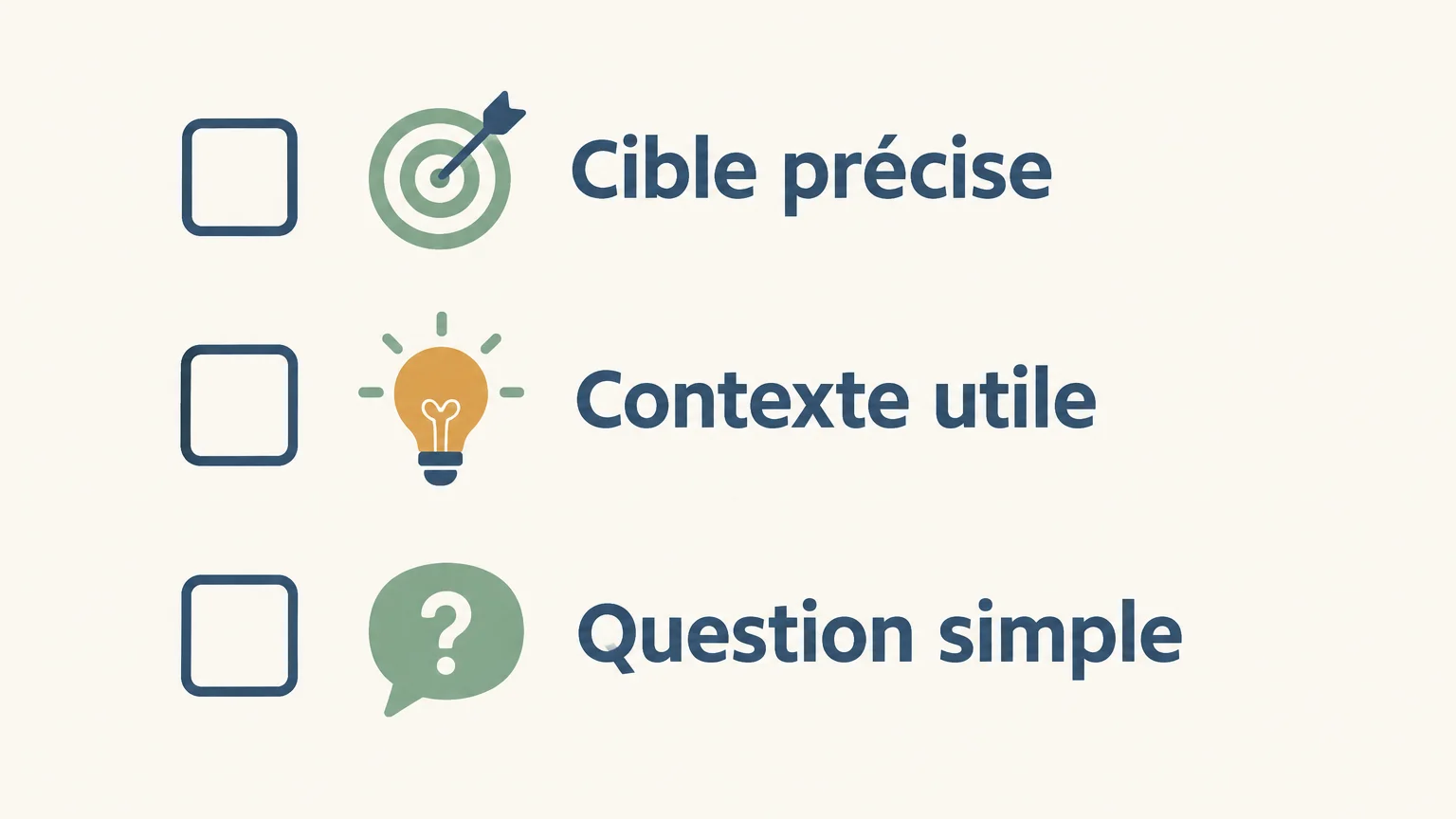
No reply does not always mean no interest, but repeating the same request gives the prospect no new reason to respond. Prepare a LinkedIn follow-up that briefly recalls the context and adds something different: a more specific question, a useful observation, or a resource directly related to the topic you raised.
As a starting point, wait a few business days after the first message, then send a brief follow-up. If it goes unanswered, you can plan one final message after another interval, taking a different angle. Adjust this pace to your sales cycle and the responses you see. Stop reaching out if the prospect explicitly declines.
For example: “Following up on my question about new account qualification. Is this a priority for your team this quarter, or would it be better to revisit it later?” This follow-up gives the prospect an easy way to answer and lets them postpone the conversation. Log each attempt to avoid accidentally following up multiple times.
Measure results by stage and test one variable at a time
A percentage is only meaningful when you know its denominator. In Hacquisition’s French B2B prospecting benchmark for the fourth quarter of 2026, the overall response rate was 7.8% across 5,733 prospects contacted, while the first message after connecting achieved 10.5% across 1,221 messages. Time frames and scopes differ; these figures show why you need to specify what is being counted before comparing results. (hacquisition.fr)
Keep your tracking simple: target segment, outreach type, message version, number of prospects contacted, replies received, and measurement window. Change only one variable at a time, such as the opening line or closing question. If you change the audience, message, and follow-up cadence all at once, you will not know what influenced the outcome.
Do not confuse feature-specific statistics with the response rate for your prospecting messages. For example, LinkedIn Help states that its InMail response metric in Recruiter counts replies received within 30 days, according to its definition of InMail responses. This recruitment-specific scope is not directly comparable to the response rate of a sales prospecting campaign.
If you track several campaigns, a tool can make it easier to centralize messages, replies, and follow-ups. Our selection of LinkedIn prospecting tools helps you evaluate solutions based on how you work, without replacing analysis of your own results.
The approach to remember
To improve your LinkedIn response rate, start with a relevant audience, draw on real context, and ask a question that is easy to answer. Follow up with something new, then measure each stage using a consistent definition. These principles will help you fix the right issue rather than simply increasing message volume.
Organize your messages and follow-ups
When prospect research, outreach preparation, and response tracking pile up, it becomes difficult to keep track of context and follow up at the right time. We designed GetCalls to organize these prospecting tasks while keeping sales reps in control of their prospect relationships.
Our agent analyzes your offering, finds prospects, and prepares personalized messages and follow-ups in an inbox that brings together LinkedIn, email, and phone. Every prepared action is submitted for approval before it is carried out. You can try our LinkedIn prospecting software without a credit card; 500 credits are unlocked once you set up your account and approve your first campaign.
Frequently asked questions
What is a good LinkedIn response rate?
There is no meaningful benchmark without knowing the message type, target audience, and denominator used. Start by comparing your own campaigns using the same calculation rules.
How do you write an effective first LinkedIn message?
Start with a verifiable detail about the prospect or their company, connect it to a business challenge, and ask a simple question. Skip lengthy introductions and generic compliments.
Should you add a note to a LinkedIn invitation?
Add one if you have a clear, specific reason for reaching out. A sentence explaining what makes your outreach relevant to their profile is more useful than a full sales pitch.
When should you send a LinkedIn follow-up?
Wait a few business days, then follow up with something new rather than repeating your first message. Adjust the pace to the context and stop reaching out if the prospect declines.
How can GetCalls help track replies?
Our prospecting agent prepares personalized messages, follow-ups, and conversation tracking in an inbox that brings together multiple channels. Prepared actions are submitted for approval before they are carried out.