

A list of names alone will not generate opportunities: your contacts need to be a good fit for your offering and have a reason to respond. To find prospects for free, start with sources you can access without a subscription and organize the information you gather. If you need a list to build on, finding a free prospect list can be a useful starting point, provided you check how relevant the contacts are and where they came from.
Cost also includes the time spent researching, sorting and following up. An effective approach avoids collecting hundreds of random profiles: first define who could realistically buy, identify contacts you can reach, then qualify them before making contact.
Start with sources you can access without a subscription
You do not need a paid database to identify your first targets. You can start with professional networks, industry events, specialist communities, customer referrals and information published by companies. These sources do not always provide direct contact details, but they offer leads to help you identify relevant organizations and people.
On a professional network, search for profiles by role, industry or region, then look at their posts and conversations before reaching out. In an industry community, answer a specific question rather than dropping in a sales pitch without context. After an event, follow up on conversations you actually had and briefly mention what you discussed.
Public directories and company websites can help confirm an organization's activities, locations or recent developments. A job posting, a new site opening or the launch of a business line may also signal a need worth exploring. An overview of methods published by Produscale in 2026 includes professional networks, communities and public information among the avenues to explore.
The real trade-off: money, time and volume

A method can be free in monetary terms while still requiring several hours of work. Researching companies, verifying roles, finding a reason to reach out and keeping a list up to date all take time. This is often a good trade-off when getting started or testing a segment, but volume depends on the time available and how easily you can access information.
By contrast, a “free” tool may mean a freemium plan with a quota, a trial period or a few features available before you need a subscription. These offers are not the same as an unlimited free method. A review published on October 2, 2026 by Entrepreneur-commercial distinguishes between several free resources and notes that volumes and terms vary by tool. Always check pricing and limits directly before signing up.
To make your choice, estimate how much time you can spend each week on research and follow-up. If you need to contact around ten carefully targeted companies, manual research and a spreadsheet may be enough. If you need to maintain a larger list regularly, the time spent researching, enriching data and following up becomes a cost to factor in, even without spending anything on software.
Qualify contacts before adding them to your list
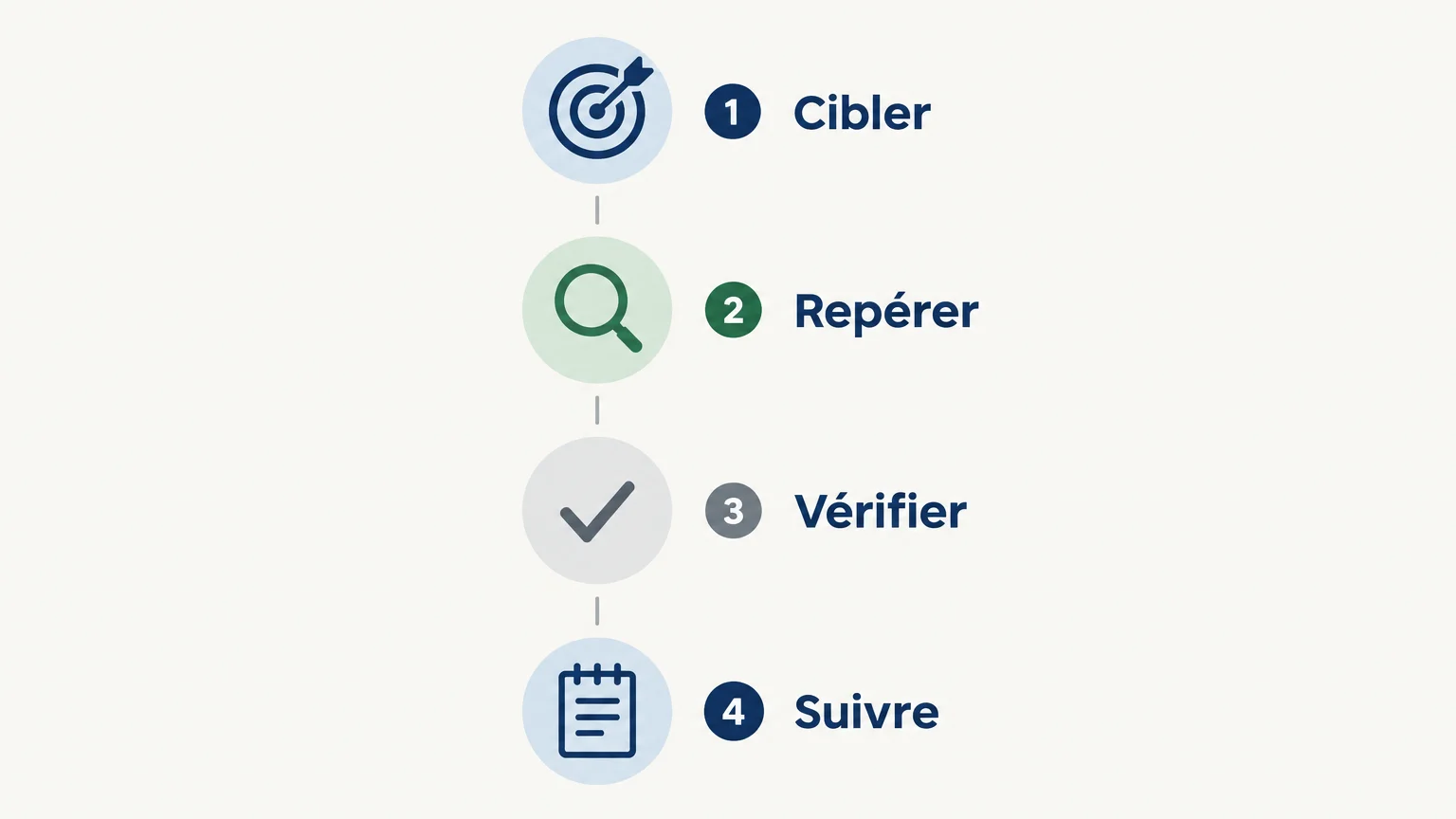
A prospect is a person or organization that may need your offering. To assess this, start with a few concrete criteria: industry, company size, location, the contact's role and the problem your offering solves. Exclude profiles that do not fit, even if their names or contact details are easy to find.
- Define your target audience based on your best-fit customers: who uses your solution, who makes the decision and in what context?
- Identify accounts through sources that align with this audience, such as industry communities, public directories or industry events.
- Check the context on the company's website or in a recent post, then note why your offering might be relevant.
- Rank contacts by fit and the quality of the available information before choosing an outreach channel.
In a prospecting list, keep only useful data: organization name, contact's role, source, verification date, reason for reaching out and next action. Add a column for missing information. This discipline helps prevent duplicates and distinguish a verified lead from a name you have simply collected.
If your main challenge is choosing the right people to contact, our article explains how to find qualified prospects. For a more structured approach to researching and verifying data, you can also read our tips on prospect sourcing and enrichment.
Use free tools without confusing a trial with free access
A spreadsheet is enough to record your initial information and organize follow-ups. You can also use the search and tracking features offered by platforms where your target audience is active. Before adding another tool, clarify what you are missing: more contacts, verified contact details, shared tracking or better task organization.
A free trial lets you evaluate a service for a limited time or usage volume; it does not mean the service will remain free. A freemium plan may limit the number of searches, exports or data enrichments. Read the terms when signing up, note the trial's end date and check whether payment details are required.
To compare options based on your needs, you can explore sales prospecting tools. Compare the steps they actually support, the free plan's limits, data export options and the manual work you will still need to do. An offer that works for a freelancer just starting out may not suit a team that needs to track the same contacts.
Check the rules and keep a record of your outreach
Just because information is visible online does not mean you can reuse it without care. Record where and when you found the contact details, reach out in a context relevant to the person's work and clearly identify yourself. Also provide a simple way for them to let you know they no longer wish to receive messages.
The rules depend on the channel, the type of recipient and the country involved. In France, the prospecting guide from France Num, published in 2022, highlights the importance of considering consent and personal data management rules for each channel. Check the applicable guidance before launching your outreach, especially if you are contacting consumers or using data obtained from a third party.
Finally, measure the quality of your list rather than just the number of contacts. After each round of outreach, record responses, rejections and useful conversations. If your offering is irrelevant to many of the people you contact, refine your targeting before increasing volume.
Key takeaways for prospecting without a budget
The most reliable approach is to choose a narrowly defined audience, use relevant sources and verify each lead before reaching out. A spreadsheet and public resources may be enough to get started, but the time spent sorting and following up is part of the real cost. Distinguish genuinely free resources from limited trials, and keep a record of both your data sources and your conversations.
Structure your prospect research and follow-up
When manual research takes up too much time, you can bring sourcing, enrichment and outreach preparation into a single workflow. AI prepares the actions; the sales rep owns the relationship and approves outreach approaches when required.
Our sales prospecting software offers a free trial with no credit card required. Once you have connected LinkedIn or email and approved your first campaign, 500 credits are unlocked. After that, 1,000 credits cost €80 excluding VAT, or €0.08 per credit, and you can adjust your volume or stop at any time with no commitment.
Frequently asked questions
Can you find prospects without paying for a tool?
Yes. Professional networks, referrals, events, industry communities and public information can help you identify leads without a subscription. Research and verification still take time, however.
What is the first step to finding prospects for free?
First, define the characteristics of the companies and people your offering is relevant to. This target audience will help you choose the right sources and filter out poor-fit contacts.
Is a free trial the same as a free tool?
No. A trial gives you access to a service for a set period or usage volume, while a freemium plan retains certain usage limits. Check the terms and any potential fees before getting started.
How do you check whether a prospect is qualified?
Check that their business activities, role and circumstances align with your offering. Record the source and your reason for reaching out, then exclude profiles for which you cannot identify a plausible need.
Can GetCalls help with prospecting at no cost beyond the trial?
GetCalls includes a free trial with no credit card required, with 500 credits unlocked after account setup and approval of your first campaign. Beyond this trial, usage is charged in credits.