
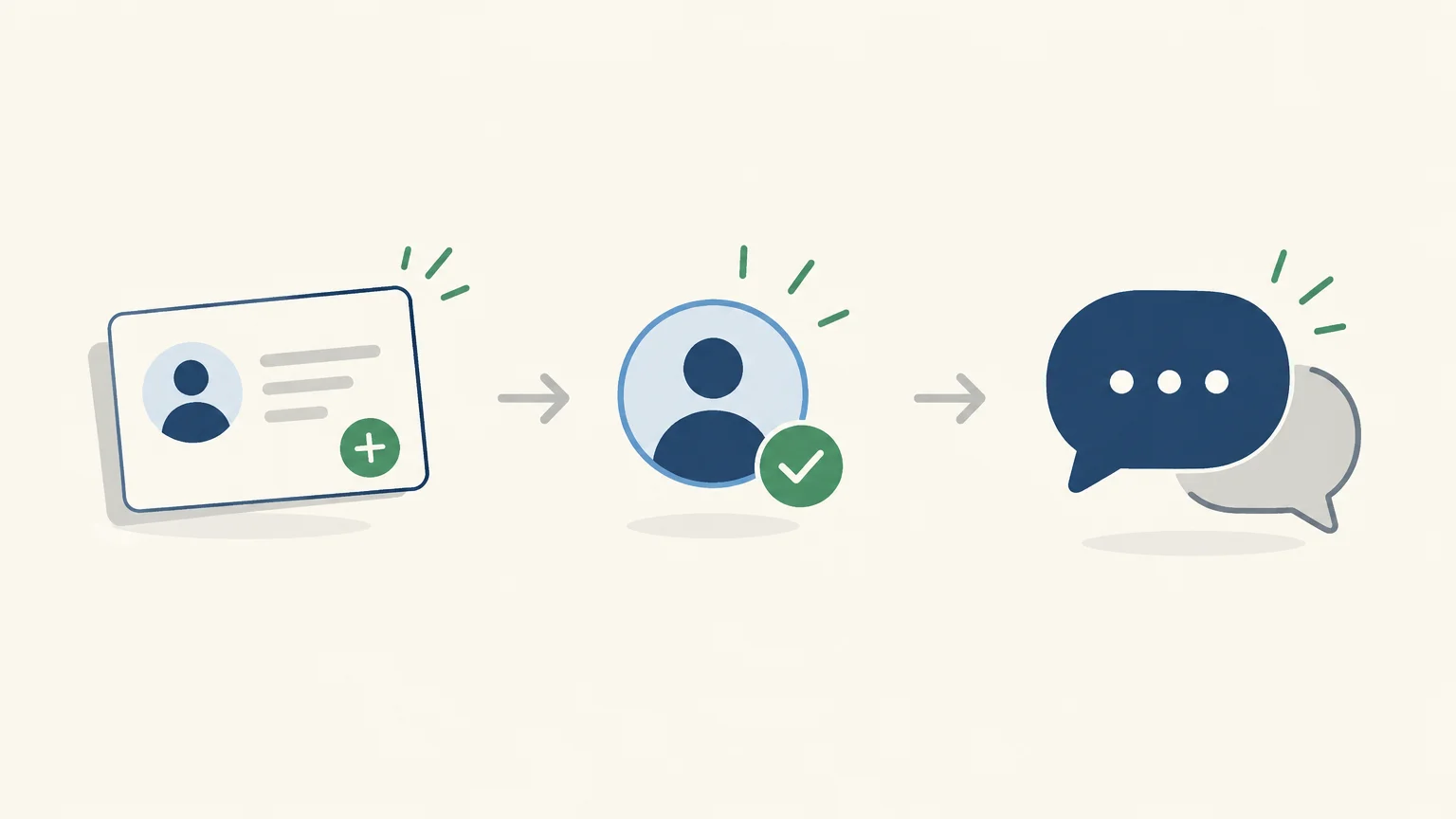
Achieving a 51% acceptance rate and a 14.5% response rate takes more than a well-written message. You need to distinguish between the invitation and the message sent after acceptance, then measure their results separately. A LinkedIn prospecting strategy becomes more consistent when the reason for reaching out is clear at every stage. For guidance on the overall process, explore how to prospect effectively on LinkedIn.
The search query appears to target a 51% invitation acceptance rate and a 14.5% message response rate, but these figures are goals, not established benchmarks. In a dataset published by Expandi in 2026, covering 13.2 million requests and 6.7 million messages, the averages were 28.5% and 10.4%, respectively. These figures come from accounts studied by the provider and do not represent a universal standard. They do, however, offer a point of comparison, provided you check the denominators.
What do acceptance and response rates measure?
A campaign can generate many accepted invitations but few conversations, or the reverse. The acceptance rate is the number of accepted invitations divided by the number sent. The response rate requires a clearly defined denominator: to evaluate a first message, divide the responses received by the messages sent after connecting.
For example, if you send 100 invitations and allow enough time for recipients to respond, 51 acceptances represent a 51% acceptance rate. If you then send 100 first messages and receive 15 replies, your response rate is 15%. Always specify whether you are counting responses against messages sent or initial invitations: these calculations describe different stages.
When interpreting results, also distinguish between a positive reply, a negative reply, and a booked meeting. Response rate measures engagement, not the sales value of a conversation on its own. Track each stage separately, from the invitation through to a meaningful exchange.
Why do some invitations get accepted?

Imagine two requests sent to the same person. The first provides no context; the second briefly explains the professional connection or shared topic. The second helps the recipient understand why connecting is relevant, without assuming that any particular wording will secure acceptance.
The quality of your precise targeting matters as much as the copy. Check the person's role, industry, and professional interests, then identify a genuine reason to reach out: a relevant responsibility, a recent post, or a challenge related to their work. Avoid turning a profile detail into a contrived excuse.
A ZEW research paper on LinkedIn connection decisions found that, in the context studied, professional factors mattered more than social ones. The practical takeaway is to highlight a concrete professional interest or shared connection rather than force familiarity, while keeping in mind that this study does not establish a general acceptance rate.
A note is useful only if it adds context that your profile does not already make clear. If you have nothing relevant to say in a few words, a simple request may be better than a lengthy sales pitch.
How can you get more responses after connecting?
Once your invitation is accepted, avoid immediately launching into a detailed presentation of your offering. Refer back to your reason for connecting, explain in one sentence why the topic matters to this person, then ask a simple question they can answer without extensive preparation.
Example: “Hi, thanks for connecting. I'm reaching out because you lead business development for a B2B team. How do you currently manage prospect follow-up after an initial conversation?” This type of message opens a conversation about the recipient's work rather than starting with a meeting request.
Meaningful personalization draws on a verifiable detail relevant to the topic. An effective sales message is not about repeating a company name or inserting a stock phrase: it shows that your outreach is intended for a specific profile. To refine the structure of your outreach, read our tips for preparing effective sales messages.
If the person does not reply, wait an appropriate amount of time for your context, then follow up once with useful additional information or a more specific question. Avoid repeating identical follow-ups, and stop if the recipient declines or asks not to be contacted again. Persistence cannot make up for poor targeting.
How should you test messages and interpret results?
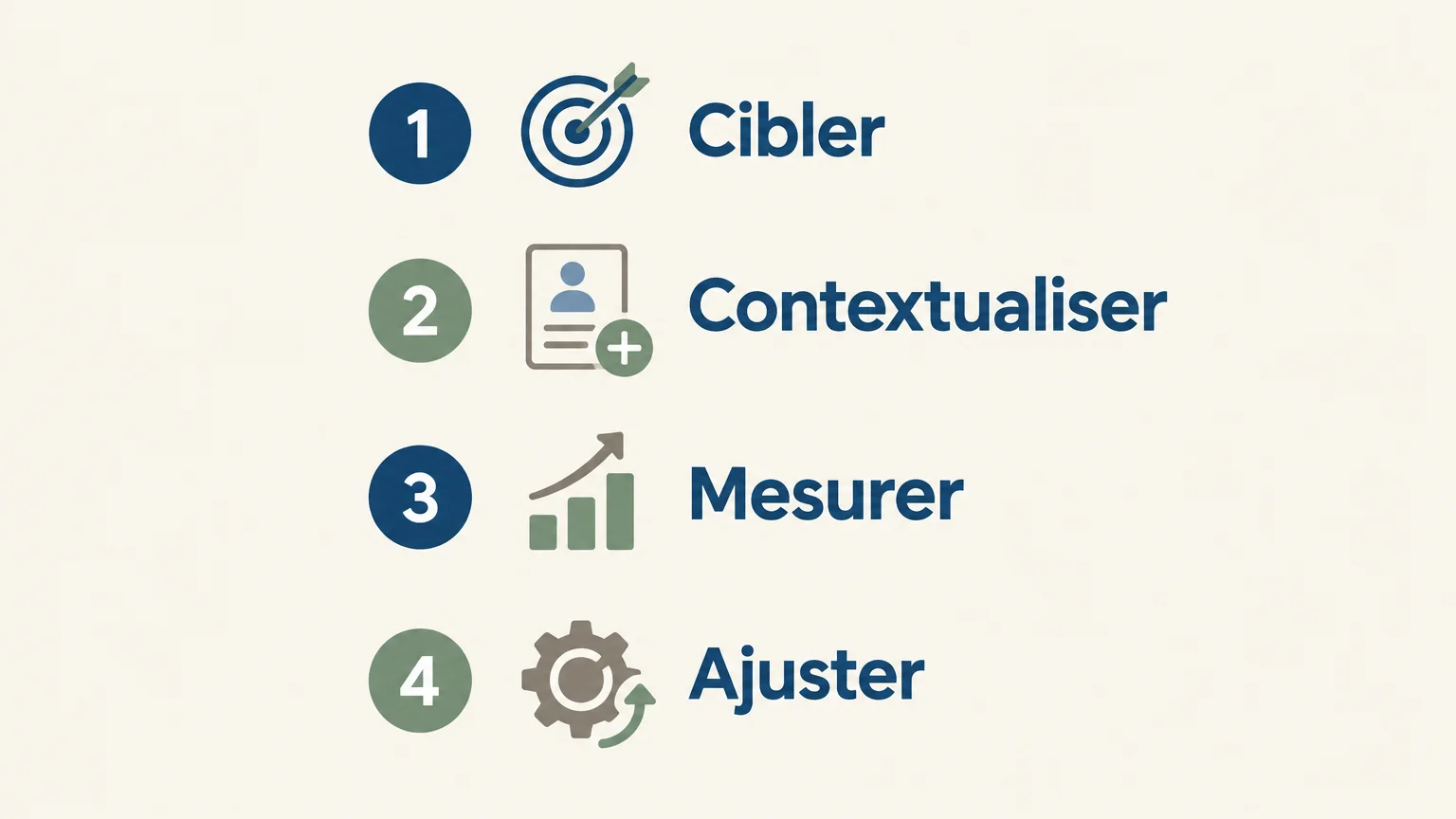
Campaign results are easier to interpret when you compare similar groups. Choose a prospect segment, keep the same goal, and change just one element at a time, such as the angle of your invitation or the question in your first message. If you change the targeting, copy, and cadence simultaneously, you will not know what influenced the outcome.
- Define the calculation. Record the number of invitations sent and accepted, messages sent, and responses received.
- Compare similar profiles. Do not group together roles or industries facing different challenges.
- Allow time for results. Set a consistent observation period so that recent invitations are not counted as rejections too soon.
- Adjust one factor. Keep everything else the same and compare the new version with your baseline.
A small sample can fluctuate significantly from week to week. Use your rates as working indicators, and review the replies you receive as well: a campaign can generate responses without achieving its sales objective. If acceptance is low, first revisit the relevance of your target profiles and the context of your invitation. If people accept your requests but rarely reply, refine your first message and its alignment with the original reason for connecting.
How can you keep your prospecting relevant over time?
Consistency does not mean sending the same text to more people. In its connection guidelines, LinkedIn recommends contacting people you know and trust, and notes that sending many invitations to people you do not know, or within a short period, can lead to restrictions. Review LinkedIn's connection best practices before setting your cadence.
When profile research, message preparation, and follow-up become difficult to manage, a tool can bring these steps together without replacing a salesperson's judgment. In our workflow, AI prepares context-aware actions and submits them for approval; the team retains ownership of the relationship and control over conversations. You can also compare LinkedIn prospecting tools based on the follow-up, personalization, and controls they offer.
Automation does not make a prospect more relevant, nor does it guarantee better rates. If you want to organize your invitation outreach, discover our approach to automating LinkedIn invitations, while maintaining a measured cadence and consistent targeting criteria.
Focus on the right metrics
A target of 51% acceptance and 14.5% response can only be assessed once you have defined exactly what each rate counts. Start with relevant profiles, maintain a clear reason for reaching out, then test your messages with comparable groups. Measure responses separately from acceptances and adjust your campaign based on genuinely useful conversations.
Structure your LinkedIn prospecting
Improving your rates means finding relevant profiles, preparing tailored messages, and tracking conversations without losing context. Our workflow brings these steps together while leaving action approval and relationship management in your team's hands.
Our prospecting agent analyzes your offering, finds prospects, and prepares personalized outreach on LinkedIn, by email, and by phone. Every prepared action is submitted for approval before execution. You can explore our LinkedIn prospecting solution and start with a free trial, no credit card required.
Frequently asked questions
What is a good acceptance rate on LinkedIn?
There is no single benchmark that applies to every industry, target profile, and relationship type. Compare your campaigns using the same calculation and similar segments.
How do you calculate your LinkedIn response rate?
Divide the number of replies received by the number of messages sent during the observation period. Specify whether you are measuring replies to first messages or across an entire sequence.
Should you always add a note to an invitation?
No. Add one when it clearly explains the professional reason for connecting. A generic or overly sales-focused note does not provide that context.
What should you change if invitations are accepted but messages go unanswered?
First, check that your opening message aligns with your reason for connecting and the recipient's role. Then test one change at a time, such as a more specific question or a more relevant angle.
How can GetCalls help organize these actions?
Our agent prepares context-aware outreach and follow-ups, then submits them to the team for approval. Salespeople remain in control of conversations and prospect follow-up.