The right call to action does not always push for a meeting: it offers a simple next step that fits the conversation and the level of trust. In a private message, asking for a specific response is often more effective than using pushy sales language. To help you build the context leading up to that request, we explain how to prepare sales messages tailored to LinkedIn.
A LinkedIn call to action suggests a clear action, such as answering a question, viewing a resource or agreeing to a conversation. The wording depends on your objective and the relationship you have already established. The same copy will not work for a public post, a connection request and an ongoing conversation.
What does a LinkedIn CTA actually ask for?
A CTA, or call to action, tells your reader what they can do next. In an outreach message, it might invite them to reply, clarify a need or agree to a conversation. It should build on the topic you have raised, rather than introduce an unrelated request.
An effective CTA does not have to be an invitation to book a meeting. If you have just connected, a simple question is often more appropriate. If the person has already described a specific problem, suggesting a focused conversation can be a logical next step. In either case, avoid packing several requests into a single sentence.
Examples for different message objectives
Want to start a conversation, share a resource or suggest a meeting? Choose a request that matches the stage of the relationship, then express it in one sentence.
- Get a reply: “Is this one of your priorities this quarter?”
- Qualify a need: “How is your team handling this today?”
- Offer a resource: “Would you like me to share the overview I mentioned?”
- Move toward a conversation: “Would you be available for a 15-minute conversation to compare your options?”
To connect the call to action to the rest of your message, start with a detail that matters to the prospect and suggest just one next step. We also share tips to improve your LinkedIn response rate by making your approach more cohesive.
One objective, tailored to the channel

In a public post, the CTA addresses your entire audience: it might invite people to comment or view a resource. In a private conversation, it addresses one person and should reflect the context of your exchange. The objectives differ, so the wording and the expected action should too.
For Message Ads, the platform’s advertising format, LinkedIn describes the option to send a personalized message with a single CTA. This documentation applies to sponsored messages: it is not a rule for all private conversations. It does, however, illustrate the value of choosing one primary action rather than offering several at once.
In both cases, adjust the effort you ask for. Commenting on a post or answering a question requires less commitment than agreeing to a meeting. A bigger request feels more natural once the conversation has established clear interest.
How do you write a clear, natural request?
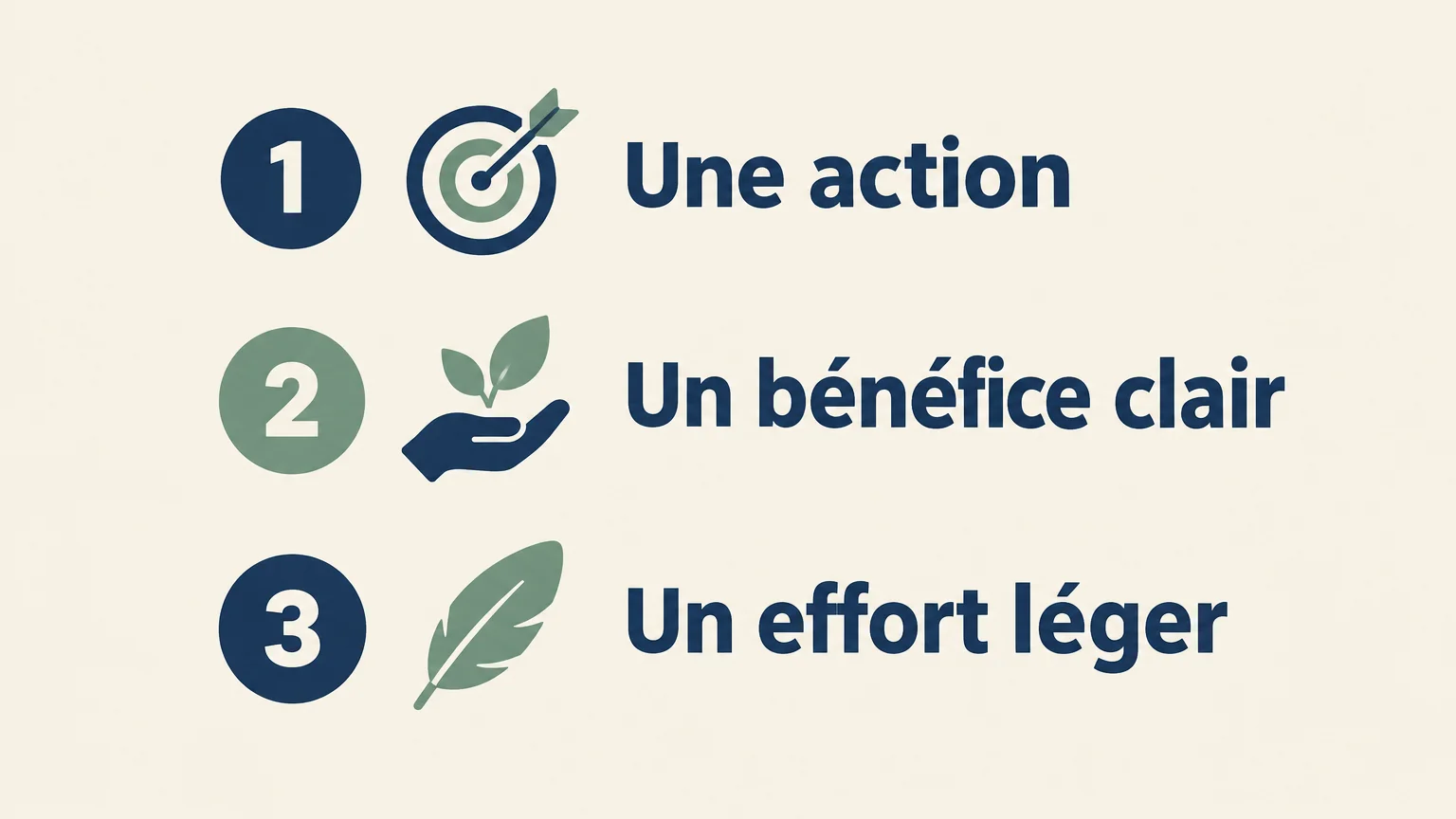
Imagine offering a demo in your very first message, before the prospect has confirmed any interest. The request may feel like too much. To write a more natural CTA, check three things: is the action explicit, is its value clear and is the effort required reasonable?
- Name the action: ask for a reply, an opinion or a conversation, without leaving the next step to guesswork.
- Refer back to the topic: connect your request to the need or point already discussed.
- Reduce friction: choose a short question or a time-limited conversation over a vague, high-commitment proposal.
For example, “What do you think?” is still vague if the topic is complex. “Is reducing processing time a priority for your team?” makes it clear what to answer. We share more LinkedIn outreach best practices to help you tailor your message to its recipient.
How do you measure whether your CTA works?
Judge a call to action against its objective. For a private message, look at whether people answer your question or agree to the conversation you suggested. For a post, distinguish between comments, reactions and clicks: these metrics do not measure the same action.
In its study published in 2026, Metricool reports that posts asking a question or explicitly inviting comments are associated with more comments in its analysis. This finding concerns engagement with posts, not replies to outreach messages. It provides a useful benchmark for testing a public CTA, but should not automatically be applied to a private conversation. Metricool’s 2026 LinkedIn study analyzes posts and their engagement.
It is also important to distinguish an invitation to comment from an opening line phrased as a question. In its 2026 analysis of more than 116,000 posts, Flypost reports that question-based opening lines received fewer reactions in its sample. This observation concerns post openings, not the effect of a question placed at the end as a CTA. The Flypost study findings illustrate why a question’s placement and purpose matter.
Track one action at a time and compare messages with the same objective. LinkedIn’s post analytics let you monitor reach and trends after publishing. To help you put the replies you receive into a broader outreach strategy, we have also gathered tips to get more replies on LinkedIn.
Key takeaways for your next message
A well-chosen call to action asks for one thing and respects the stage of the conversation. Choose your objective first, write a specific request, then check whether it generates the response you wanted. A CTA does not need to be pushy to be clear: its relevance depends above all on the connection between the message’s context and the action you propose.
Prepare your LinkedIn outreach messages
Writing a clear request takes time when each approach also needs to account for the person’s profile, context and previous conversations. We built GetCalls to prepare personalized messages and organize outreach actions in a single inbox.
Prepared actions are presented individually for approval before they are carried out. This keeps the sales rep in control of the relationship and the messages sent. To structure this workflow around LinkedIn, explore LinkedIn outreach with GetCalls.
Frequently asked questions
What is a CTA on LinkedIn?
It is an invitation to take a specific action after reading a post or message. That might mean answering a question, viewing a resource or agreeing to a conversation.
Which CTA should I use in a LinkedIn outreach message?
Choose a request that fits the message’s topic and the relationship you have already established. A simple question works well to start a discussion, while an invitation to talk is more appropriate once a specific need has been expressed.
Should I always ask for a meeting?
No. A meeting requires more commitment than a short reply or an opinion, and is not necessary at every stage. Ask for one when the conversation justifies it.
How do I know if my call to action is working?
First, define the action you want people to take, then track the replies or engagement that match that objective. Compare similar messages and keep comments, clicks and private replies separate.
How can I prepare personalized CTAs at scale?
With GetCalls, we prepare personalized messages and present actions individually for approval before they are carried out. The sales rep retains ownership of the prospect relationship and decides which actions to approve.