

What good is a contact list if the companies are not a fit for your offering or the details do not help you reach the right person? A qualified prospect list starts with alignment between your target market, the organizations you select, and the people you contact. To find qualified prospects, start with clear criteria rather than simply collecting names.
Qualification is not about filling in another column or buying a large database. It means checking that each company and contact warrants sales outreach, then keeping enough information to personalize that approach. The quality of your list therefore depends as much on your selection criteria as on how you verify, update, and track the data.
What makes a prospect list qualified?
A qualified list brings together companies that match a defined target profile and relevant contacts within those companies. It contains actionable information to help you decide whom to contact, why your offering might be relevant to them, and which professional channel to use.
The first benchmark to establish is your ideal customer profile. Describe the companies your offering serves, for example by industry, size, geographic reach, or an identifiable business need. Then specify the relevant roles: an HR manager, an IT leadership team, and senior executives face different challenges.
Each entry in the list should answer practical questions: does the company fit your target criteria? Does the contact hold a relevant role? Do you have a verifiable business contact method? Is the reason for reaching out clear? Without these answers, the record is incomplete, even if it includes an email address.
Which criteria should you check before using the database?

Imagine a list where the companies match your target profile, but several contacts have changed roles. The list looks complete, yet part of the campaign could reach the wrong people. Assess each record against separate criteria rather than mistaking the amount of information for actual quality.
- Target fit: do the company’s activities, size, and location match your criteria?
- Contact relevance: is the person’s role or responsibility relevant to the purpose of your outreach?
- Data freshness: have the person’s role, the company’s existence, and the contact details been checked recently?
- Contact accuracy: is the business email address or phone number associated with the right person and organization?
- Qualification signal: do you have concrete evidence that explains why reaching out makes sense, rather than an assumption?
- Source and history: do you know where the data came from, when it was collected or verified, and whether the person has already been contacted?
The fields you need depend on your channel and business. For B2B prospecting, the B2B data examples provided by La Poste include business information such as SIRET registration numbers, phone numbers, and employee counts. This company data can sharpen your targeting, but it does not replace checking the contact’s role or their contact details.
Qualification, enrichment, and verification: three distinct processes
A record can be enriched without being qualified. Adding a phone number, industry, or job title makes the record more complete; it does not prove that the company is a fit for your offering or that the contact is the right person to approach.
Prospect qualification means comparing the available information against targeting criteria and deciding whether the contact warrants sales outreach. Enrichment fills in missing or useful fields. Verification checks that the information, particularly contact details and job roles, is accurate enough to use.
Take an IT services company. Its industry may fit your target profile, but a contact responsible for recruitment will not necessarily be relevant to an offering aimed at IT leaders. The job title, the nature of your offering, and the business context should all be considered before marking the record as a priority.
When essential fields are missing, enriching a prospect list can help fill in useful information. Keep a clear distinction between added data, verified data, and sales assumptions. This makes checks easier and prevents uncertain information from being treated as established fact.
How do you build and clean a qualified prospect database?
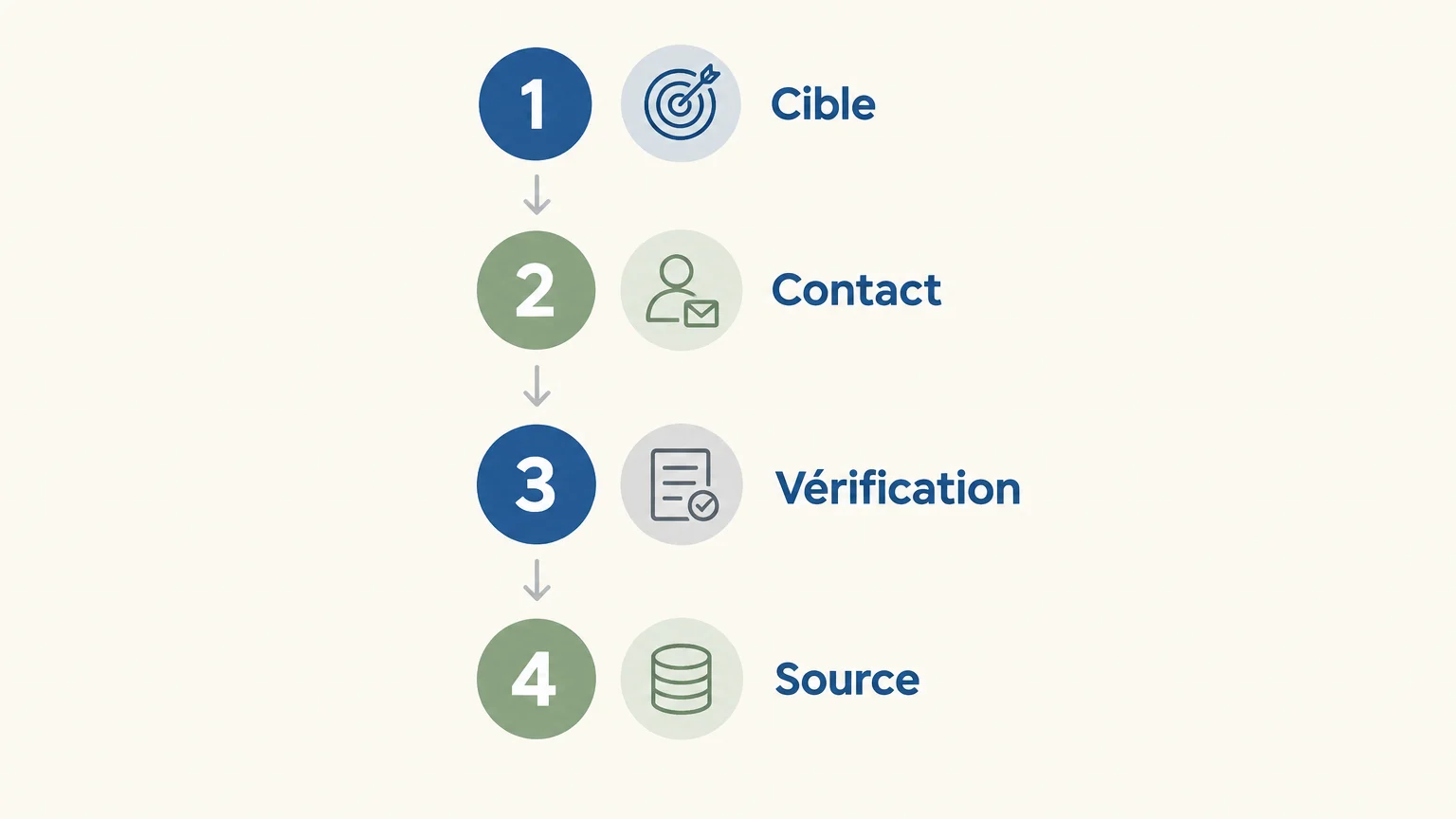
For a team launching a new campaign, a step-by-step approach avoids cleaning an entire list without knowing which contacts are relevant. Start with a segment narrow enough to check every criterion, then expand it only if the initial results confirm that your targeting is sound.
- Define your target: document the company criteria and roles to contact, separating must-haves from preferences.
- Find organizations: gather companies that meet your chosen criteria and record the source of each piece of data.
- Identify the right contacts: check that the people selected hold roles relevant to your offering.
- Check contact details: confirm the information needed for your chosen outreach channel and flag unverified fields.
- Assign a status: distinguish contacts ready for outreach from those that need more information, require another check, or should be excluded, using rules shared across the team.
- Review records: after each interaction, correct errors and record role changes, responses, and requests not to be contacted again.
Public data can help identify and describe organizations, but it does not necessarily provide direct contact details or business context for each person. France Num describes how open data, including data from INPI and INSEE, can enrich company information. This approach usefully complements the information your team collects; it does not remove the need to check whether a contact is relevant.
To structure these steps without separating research from record updates, prospect sourcing and enrichment can be part of the same process. What matters is keeping a record of what was found, added, and actually verified.
What precautions should you take with data sources and usage?
An actionable record should also make it clear why and how a person can be contacted. Keep track of the source, the collection or verification date, the business context, and previous interactions. Also provide a clear status for contacts who opt out of further outreach.
For electronic messages sent to professionals, the CNIL guidance on direct marketing notes, among other things, that outreach must relate to the person’s profession, that they must be informed, and that they must be able to opt out easily and free of charge. Relevant targeting and traceable data therefore help you prepare an appropriate approach, not just improve sales efficiency.
Finally, avoid keeping contacts indefinitely without reviewing them. Set an internal policy for reviewing incomplete or outdated records, and remove people who should no longer receive outreach from active lists. A reliable history helps the team avoid repeating an approach and resume conversations with the right context.
When does a prospecting tool become useful?
If research, enrichment, and verification work are piling up across separate files, a tool can help centralize the process and track planned actions. Our prospecting agent analyzes the company’s offering, determines an ideal customer profile, finds prospects, and enriches their contact details when available. Prepared actions are presented to the user for approval.
We analyze more than 50 data sources and report approximately 1,000 new qualified prospects per month. This figure reflects a performance claim made by GetCalls, not an independently verified result or a guarantee for every user. To assess whether a prospect enrichment tool is right for you, examine the data sources, which fields can be verified, the ability to review actions, and how easily records can be corrected.
Automation does not replace sales judgment or relationships with prospects. It helps prepare and organize the work; salespeople remain in control of validating information and managing the conversations that follow.
A useful list is a verifiable list
A qualified prospect database is measured not by its number of rows, but by the relevance of its companies, the accuracy of its contacts, and the ability to trace its data sources. Define your target profile, distinguish qualification from enrichment, and check information regularly before reaching out.
Build your prospecting process around your target audience
When contact research, enrichment, and conversation tracking span multiple tools, a centralized process helps preserve the context for every prospect. Our agent prepares outreach actions on LinkedIn, by email, and by phone, then submits them for approval so the team stays in control of who gets contacted.
You can try our sales prospecting software without a credit card. Once you have set up your account with LinkedIn or a connected email inbox and approved your first campaign, 500 credits are unlocked so you can test how the service works.
Frequently asked questions
What is a qualified prospect list?
It is a list of companies and contacts that match defined targeting criteria. The information lets you check whether a contact is relevant and prepare an appropriate business approach.
What information should you keep in a prospect record?
Keep the details needed for targeting, identifying the right person, and reaching out, along with the source and verification date. Also include interaction history and opt-out status where applicable.
What is the difference between qualifying and enriching a prospect?
Enrichment means adding missing or supplementary information. Qualification means assessing whether the company and its contact fit your target profile and warrant sales outreach.
How do you check whether a prospect list is up to date?
Check that the company still exists, confirm the contact’s role, and verify the relevant contact details before the campaign. After each interaction, update the information and the record’s status.
Can a tool help qualify B2B prospects?
Yes, a tool can bring together research, enrichment, and record tracking. At GetCalls, the agent prepares actions and submits them for approval, while the team remains in charge of the sales relationship.